
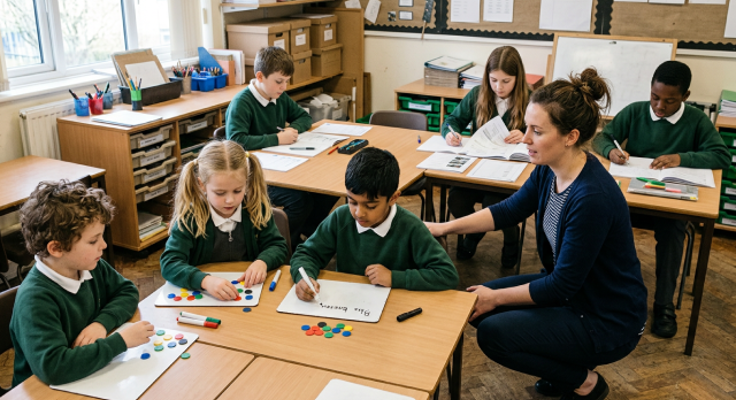
 Editor's pick
Classroom Inspiration & Curriculum Ideas
Classroom inspiration works best when it starts with what children need to learn. Explore practical teaching ideas, curriculum activities and adaptable approaches for early years and primary classrooms. Find ways to connect subjects, support participation and make purposeful use of familiar resources, with guidance that helps you turn a promising idea into manageable everyday practice.
Classroom Inspiration & Curriculum Categories
How can you turn an activity idea into purposeful learning?
Start with a clear learning intention, then choose an activity that helps children explore or practise it. Think about what they already know, the vocabulary you will introduce and how you will recognise understanding. A memorable theme can provide a starting point, while the teaching sequence gives it purpose.
Before adding new materials, consider what you already have. Books, whiteboards, loose parts and everyday objects can be used in different ways across the week. Keep preparation manageable and allow time to revisit ideas rather than introducing a new activity for every lesson.
→ Related Guide: Eight (not six / seven) Teaching Tips and Strategies by Mike Kinnear
Featured articles


How Can Teachers Use Social Media for Professional Development?
Teachers can use social media for professional development by following credible organisations, joining focused education communities and using relevant posts to begin further reading or reflection. It is most valuable when staff verify claims, protect professional boundaries, follow safeguarding and data-protection procedures, and connect informal online learning with their role, pupils and wider school priorities.
Natalie McMunn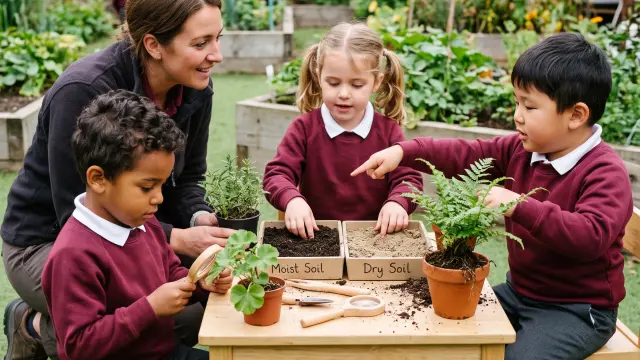
How Can Early Years Settings Close the Vocabulary Gap?
Early Years settings can help close the vocabulary gap by creating frequent, meaningful opportunities for children to hear, understand and use new words. Responsive conversation, shared reading, songs, storytelling, role play and practical experiences are most effective when adults follow children’s interests, revisit vocabulary in different contexts and value every child’s home language and way of communicating.
Jack Clarke
How Small School Leaders Can Manage Workload Staffing and Resources
Leading a small primary school means balancing strategic decisions with day-to-day responsibilities, often with limited staffing and little spare capacity. The most effective approach is to set a small number of clear priorities, share responsibility carefully, protect staff workload and use local partnerships to strengthen curriculum planning, recruitment and resource management.

Bring mystery-busting nature series Stan & Gran into your classroom this year!
Stan & Gran inspires young children to explore nature, develop critical thinking and discover wildlife through fun adventures.
Jon Mason
Digital Citizenship: Building Resilience, Not Just Rules
Explore how the CCC moves online safety beyond simple rules to develop true digital citizenship. Aligned to the Education for a Connected World framework, this article highlights how pupils build critical thinking, resilience, and responsible online behaviours through embedded learning and interactive Wayground assessments, empowering them to navigate the digital world with confidence.
Sarah Gorman
Why Physical Computing is at the Heart of the CCC
Explore how the CCC uses physical computing and the micro:bit to bring coding to life. This article highlights how pupils progress from simple LED animations in KS2 to real-world projects using sensors, while developing problem-solving, resilience, and computational thinking skills. Perfect for schools looking to make better use of their micro:bit devices through structured, curriculum-aligned lessons.
Sarah Gorman
The Teacher’s Secret Weapon: Reducing Workload Without Sacrificing Quality
Discover how the Connected Computing Curriculum (CCC), available through EuHu, helps primary teachers reduce planning workload while delivering high-quality computing lessons. Designed by educators, the CCC provides a complete toolkit including lesson sequences, assessment rubrics, progression mapping, and interactive Wayground quizzes.
Sarah Gorman
3 creative and easy summer activities for early years: Part 3
Discover three simple, low-cost outdoor summer activities for early years children designed in collaboration with Early Years Outdoors. These activities—Summer Herby Tea, Summer Petal Cupcakes, and Summer Colours—boost language, creative thinking, and sensory development using accessible, everyday natural resources.
Katie Taylor
Cosmic Kids Yoga in the Classroom: Small Moments, Big Difference
Discover how introducing short, impactful yoga and mindfulness routines into everyday classroom routines helps children reset, focus, and regulate big emotions. This article explores our exclusive partnership with Cosmic Kids and Learning Resources to deliver easy, zero-prep tools designed to cultivate calmer, happier learning environments.
Win Ho
Making Coding Feel Real with EaRL
Computing can sometimes be one of those subjects where children can say the right words without those words fully meaning something to them yet. They might say algorithm, sequence or debugging, but that does not always mean it has properly clicked.
Simon Hunt
Early signs of Spring for Early Years children
Check out how to spot early signs of spring and turn them into meaningful, playful learning moments with your little learners.
Katie Taylor
Schools Want Sustainable Choices — But They Need Clarity and Practical Support
Sustainability is firmly on the agenda for schools, but leaders are clear that environmental ambition must be matched with practical reality.
Frequently Asked Questions
How do I choose a classroom activity that supports the curriculum?
Begin with what you want children to know, understand or practise. Check where the activity fits in your teaching sequence and what pupils already know. Then choose materials, questions and support that serve that aim. Decide what you will look or listen for so that you can judge whether the activity has helped.
Can one resource support learning across different subjects?
Yes, when each use has a clear purpose. A set of objects might support counting, descriptive language or a sorting investigation at different times. Make the intended learning explicit and avoid adding subject links simply to make an activity cover more areas. Reusing familiar materials can also reduce preparation and help children use resources confidently.
How can I adapt an activity for children with different needs?
Keep the learning intention in view while adjusting how children access the task and show understanding. You might use larger materials, visual prompts, shorter instructions, a quieter space or additional modelling. Draw on what you know about individual pupils and agreed support plans. Review the adaptation through observation and discussion, rather than assuming one approach suits everyone.
What can I do when planning time is limited?
Choose a familiar routine and change the content rather than rebuilding the whole lesson. Reuse resources, keep instructions clear and select one manageable learning focus. A short discussion, worked example or practical task can be useful when it fits the teaching sequence. Keep notes on what worked so that successful approaches are easier to use again.
Are the ideas suitable for both early years and primary classrooms?
This hub brings together ideas for early years and primary teaching, but each activity needs to be checked against the children, curriculum and setting. Early years provision may involve exploration and responsive adult interaction, while primary lessons may need more explicit subject teaching. Use the linked article to assess its audience and adapt the approach thoughtfully.