

 Editor's pick
Writing and Mark-Making Resources for EYFS
EYFS children need access to varied mark-making tools that reflect their interests, physical development and individual needs. Useful resources may include chunky crayons, chalks, pencils, paintbrushes, whiteboards, washable pens, paper and sensory materials. These should be available across indoor and outdoor provision so children can explore marks, develop control and begin communicating meaning through drawing and early writing.
EYFS Writing, Mark-Making and Classroom Organisation Categories
What writing and mark-making tools does an EYFS child need?
Children benefit from access to a varied but manageable selection of mark-making tools. These may include crayons, chalks, pencils, washable felt-tip pens, paintbrushes, whiteboards, whiteboard pens and tools for making marks in sand, dough, paint or other sensory materials.
The resources should reflect children’s ages, physical development, interests and preferred ways of working. Some children may begin with large movements using their whole arm, while others may be ready to create smaller, more controlled marks. Practitioners should avoid rushing children towards formal handwriting before they have developed the physical control, confidence and motivation needed to make marks purposefully.
→ Related guide: How Mark-Making in EYFS Supports Early Writing Skills
Which mark-making tools support pincer-grip development in EYFS?
A pincer grip involves using the thumb and index finger to pick up and control small objects. It forms part of wider fine-motor development, but practitioners should not treat it as an isolated exercise or expect every child to develop control at the same rate.
Tools and activities that may provide useful opportunities include small pieces of chalk, short crayons, tweezers, pegs, threading resources, dough tools and suitable construction pieces. Children also need broader physical experiences involving their shoulders, arms, wrists and hands. Fine-motor activities should therefore sit alongside climbing, carrying, digging, building, painting and other whole-body movement.
→ Related guide: Which Mark-Making Tools Support Pincer-Grip Development in EYFS?
What colouring and mark-making equipment does a nursery need for babies and toddlers?
Babies and toddlers need safe, developmentally appropriate opportunities to notice, create and explore marks. Suitable provision might include large sheets of paper, chunky crayons, washable paint, broad brushes, rollers, sponges and supervised sensory materials.
Resources should be easy to hold and selected according to the manufacturer’s age guidance. Practitioners should expect children to explore with their whole bodies rather than remain seated or produce recognisable pictures. Covering floors or tables and using washable materials can allow greater freedom of movement. Close supervision is essential, particularly where younger children may mouth resources. Practitioners should value children’s exploratory marks without expecting a finished product.
→ Related guide: What Colouring and Mark-Making Equipment Does a Nursery Need for Babies and Toddlers?
Why do glue sticks and whiteboard pens dry out in early years settings?
Glue sticks and whiteboard pens often dry out when their lids are left off, caps are not replaced securely or resources are stored in unsuitable conditions. Early years children may still be learning how to look after shared equipment, so the organisation of the area is important.
Choose products that children can open and close with suitable independence. Use clearly labelled containers, model how lids should be replaced and include resource care within tidying routines. Practitioners should check equipment regularly and remove anything damaged or unusable. This supports independence and reduces waste without turning the provision into a whole-school stationery or procurement guide.
→ Related guide: Why Do Glue Sticks and Whiteboard Pens Dry Out in Early Years Settings?
→ Related guide: How Whiteboard Pens Support Early Mark-Making in EYFS
Which Adhesives Are Suitable for Early Years Art and Craft?
Adhesives in early years settings must be age-appropriate, safe, and manageable for young children developing their fine-motor skills. From glue sticks for paper collage to PVA and spreaders for modelling, proper selection ensures children can join materials independently.
→ Related guide: Which Adhesives Are Suitable for Early Years Art and Craft?
How should an EYFS classroom be organised for independent access to resources?
Writing and mark-making resources should be visible, accessible and easy for children to return. Child-height shelves, labelled containers, portable writing baskets and clearly organised resource stations can encourage children to make choices and use writing materials throughout their play.
Resources should not be restricted to a single writing table. Clipboards, notepads, pencils and chalks can be placed in role-play areas, construction spaces, investigation areas and outdoor provision. Practitioners should avoid overcrowding shelves or offering so many choices that children cannot navigate them. Organisation should support purposeful independence while allowing adults to adapt provision according to children’s interests, development and individual needs.
→ Related guide: How Should an EYFS Classroom Be Organised for Independent Access to Resources?
How does mark-making develop towards early writing?
Mark-making development is not a fixed sequence that every child follows at the same age. Children develop at different rates and may move between different tools, movements and ways of representing meaning. Practitioners should use observation and professional judgement rather than treating the table below as a checklist.
| Developmental focus | What practitioners may observe | Suitable tools and experiences | Helpful practitioner response |
|---|---|---|---|
| Sensory exploration | Children explore materials using their hands, fingers or whole bodies and begin to notice the marks their movements create. | Finger paint, water, mud, damp sand, large brushes, rollers and other supervised sensory materials. | Allow time for exploration, describe children’s actions and avoid expecting a finished picture. |
| Large-scale movement | Children make broad lines, circles, sweeps and repeated movements using their shoulders and arms. | Chalks, large paper, easels, water painting, floor drawing and outdoor mark-making tools. | Provide vertical, horizontal, indoor and outdoor surfaces with enough room for movement. |
| Manipulation and control | Children show increasing control when squeezing, pinching, turning, threading and using tools. | Dough, pegs, tweezers, threading resources, construction materials and suitable scissors. | Offer varied fine-motor experiences alongside gross-motor and core-strength activities. |
| Controlled mark-making | Children begin to use crayons, pencils, pens and brushes with increasing purpose and control. | Chunky crayons, short pencils, washable pens, paintbrushes, chalks and whiteboards. | Follow the child’s preferred hand and avoid forcing a particular grip before they are ready. |
| Giving meaning to marks | Children begin to explain their drawings or marks and use symbols during play. | Notepads, clipboards, cards, labels, envelopes, role-play forms and message boards. | Show genuine interest, record the child’s explanation where appropriate and model writing for real purposes. |
| Early writing | Children begin to use letter-like shapes, recognisable letters or words to communicate meaning. | Pencils, pens, whiteboards, book-making materials, name cards and purposeful writing prompts. | Model letter formation when appropriate while preserving the child’s confidence, meaning and motivation. |
Practical Setup Guidance & Range Spotlight
Explore comprehensive guidance covering EYFS area setup, areas of learning, and Hope Education range selection below.
1. How can mark-making support different areas of the EYFS?
Mark-making is closely connected to Physical Development and Literacy, but it can also arise naturally across the wider EYFS curriculum.
| EYFS area of learning | How mark-making may contribute | Example opportunities |
|---|---|---|
| Communication and language | Children can talk about their marks, explain their ideas and learn vocabulary linked to tools, actions and materials. | Describing a picture, explaining a plan or dictating a caption to an adult. |
| Personal, social and emotional development | Children can make choices, express ideas and develop confidence in their own representations. | Selecting materials, sharing a drawing or contributing to a group plan. |
| Physical development | Using tools can provide opportunities to develop hand control, coordination and manipulation. | Drawing, painting, cutting, squeezing, threading and using tweezers. |
| Literacy | Children can begin to understand that marks, symbols and writing communicate meaning. | Making signs, lists, messages, labels, cards and simple books. |
| Mathematics | Children can record quantities, patterns, shapes and mathematical ideas. | Drawing shapes, recording scores, making tally marks and creating patterns. |
| Understanding the world | Children can record observations, plans and ideas about their environment. | Drawing a plant, mapping a route or recording what they noticed outdoors. |
| Expressive arts and design | Children can explore line, shape, colour, texture and visual representation. | Drawing from imagination, combining materials and experimenting with tools. |
2. How should writing and mark-making resources be organised?
Provide mark-making throughout the setting: Place appropriate writing and drawing tools in different areas of provision rather than limiting them to a writing table. Role play, construction, mathematics, small-world play and outdoor learning can all create meaningful reasons to make marks.
Use child-height storage: Store suitable resources where children can see and reach them. Use open shelves, writing caddies, labelled pots, transparent containers or picture labels where these help children select and return equipment.
Avoid overcrowding: Offer a varied but manageable collection. Too many similar tools can make choices difficult and create unnecessary clutter. Rotate materials purposefully when they support children’s interests or introduce a worthwhile new experience.
Include portable writing resources: Create writing baskets or portable caddies containing clipboards, paper, pencils, chalks and other suitable tools. These can be moved into different areas of indoor and outdoor provision.
Model resource care: Show children how to replace lids, return tools and check their work area. Keep the process simple and appropriate to the children’s development rather than expecting adult levels of organisation.
Plan for left-handed children: Allow children to establish their preferred hand naturally. Position resources so left-handed children have enough space and provide suitable tools, including left-handed scissors, where needed.
Make reasonable adjustments: Consider grip, strength, movement, vision, sensory preferences and access needs. Adapt the environment and resources so children can participate without assuming that one tool or approach will suit everyone.
3. Hope Education writing and mark-making resources
Hope Education provides early years resources for mark-making, fine-motor development, colouring, classroom organisation and early writing. When selecting resources, settings should consider:
- Children’s ages and developmental stages
- Gross- and fine-motor development
- Ease of holding and controlling the resource
- Indoor and outdoor use
- Washability and ease of cleaning
- Independent access and storage
- Left-handed use
- SEND and accessibility requirements
- Manufacturer age guidance
- How the resource supports meaningful play and communication
Resources should be compared according to their suitability for children’s development and the intended learning experience. This hub should not use the GLS cost-per-class, stationery-quantity or Classmates comparison approach.
Featured articles

EYFS Writing and Mark-Making Provision Checklist
Use this checklist to plan or review mark-making, early writing and classroom organisation in a nursery, Reception class or early years setting.
Ready to order? Browse the full early years resources range with free next-day delivery on orders over £40.
Shop early years resources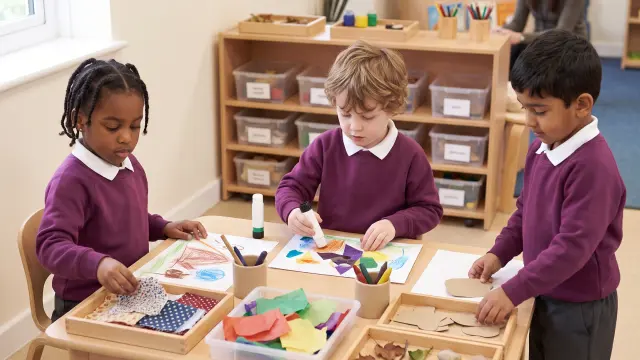
How to Organise an Early Years Art Area for Independent Use
An effective Early Years art area allows children to see, choose, use and return creative resources with increasing independence. Materials should be accessible, clearly organised and appropriate for the children using them. By offering purposeful choices, establishing manageable routines and protecting opportunities for experimentation, practitioners can support creativity without creating an unsafe, cluttered or overly adult-directed space.
Emma Davies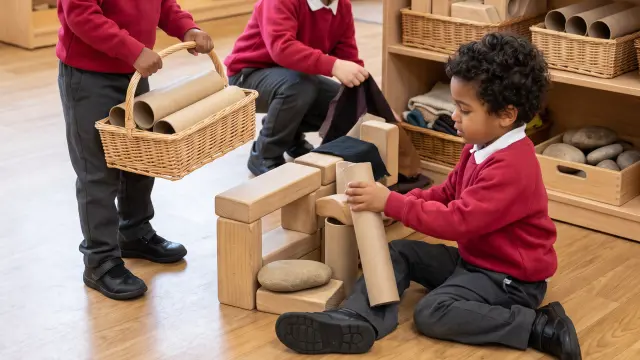
Storage Baskets for Loose Parts: An EYFS Setting Guide
Storage baskets help EYFS practitioners organise loose parts so children can see, choose, use and return resources independently. The most effective storage is accessible, clearly arranged and matched to children’s developmental needs. By selecting suitable baskets, limiting the number of materials available and reviewing provision regularly, settings can create calmer enabling environments without restricting open-ended play.
Sarah Jenkins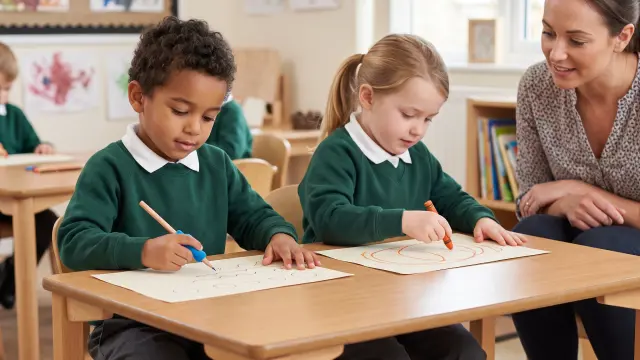
Pencil Grips and Fine Motor Development: What EYFS Settings Need to Know
Pencil grips can help some children hold and control writing tools more comfortably, but they are not a universal solution for developing an effective pencil grasp. EYFS settings should first provide varied opportunities to strengthen children’s hands, coordination and movement. Where a grip is introduced, it should respond to an identified need and be monitored carefully.
Clare Harrison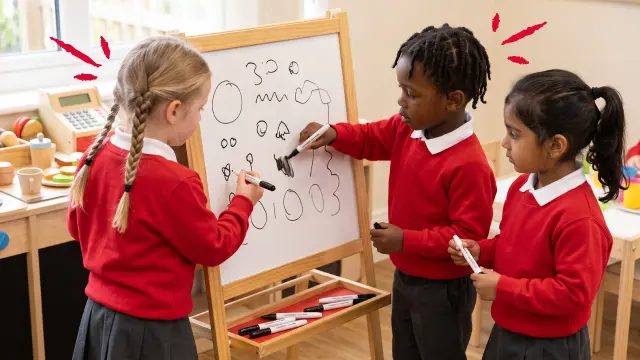
How Whiteboard Pens Support Early Mark-Making in EYFS
Whiteboard pens support early mark-making by giving children a responsive, wipe-clean way to draw, write, experiment and try again. When used with suitable whiteboards, they can build confidence, develop controlled movement and support early literacy, phonics and creative expression. Their greatest value comes when children use them purposefully across play and continuous provision.
Natalie McMunn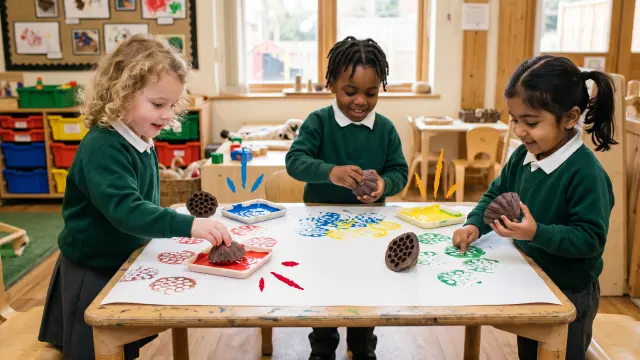
How Mark-Making in EYFS Supports Early Writing Skills
Mark-making supports early writing by helping children understand that movements can create visible marks and that those marks can carry meaning. Through drawing, painting, scribbling, pattern-making and pretend writing, children develop the physical control, language, confidence and symbolic understanding needed to move towards letter formation, spelling and purposeful written communication.
Natalie McMunn
How to Organise EYFS Resources for Children's Independent Access
Organising EYFS resources for children's independent access helps create an enabling environment where children can confidently make choices, develop independence and take ownership of their learning. When resources are thoughtfully organised and easily accessible, children spend less time waiting for adult support and more time exploring, creating and learning through meaningful play experiences.
Rachel Pangburn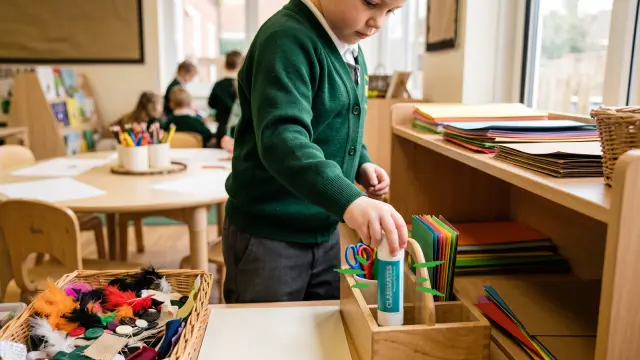
What Glue Is Safe for EYFS Children to Use Independently?
The safest glue for EYFS children to use independently is typically a non-toxic glue stick designed for educational use. Glue sticks are easy for young children to control, support developing fine motor skills and create less mess than many liquid adhesives. When chosen carefully and introduced through clear routines, appropriate adhesives can help children develop independence, creativity and confidence while maintaining a safe learning environment.
Adelle Whitfield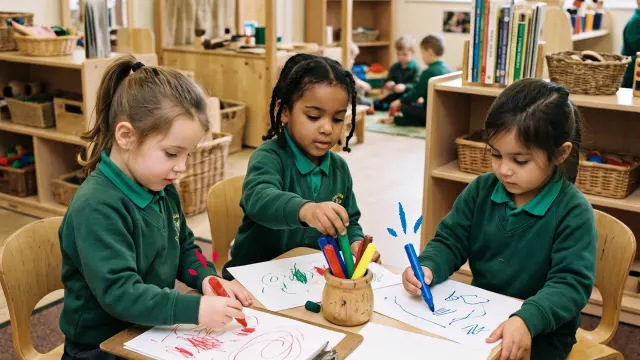
Writing Tools for EYFS and Nursery Children: A Buying Guide
The best writing tools for EYFS and nursery children are those that support their stage of physical development, encourage confident mark-making and make writing feel purposeful and enjoyable. From chunky crayons and paint markers to triangular pencils and clipboards, choosing the right tools helps children develop fine motor skills, pencil control and positive attitudes towards writing long before formal handwriting begins.
Carla Bonner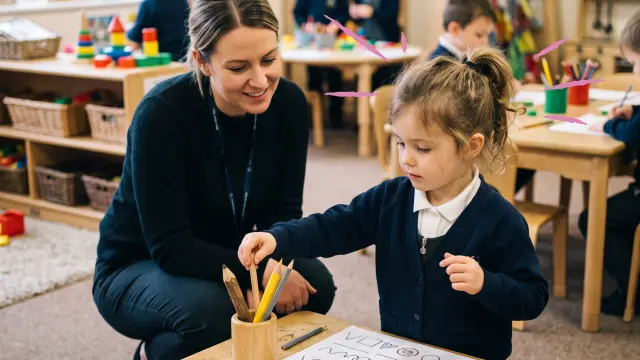
Which Pencils Support Handwriting Development at Each EYFS Stage?
The best pencils for EYFS children are those that match their stage of physical development rather than their age alone. As children progress from early mark-making to forming recognisable letters and words, their pencil needs change. Choosing developmentally appropriate writing tools can support grip strength, control, confidence and handwriting readiness while helping children build positive attitudes towards writing.
Jack Clarke
Classroom Organisation Ideas
25 tips, tricks and ideas for getting a hold of your classroom organisation and sorting it into the educational space of your dreams.
Frequently Asked Questions
What writing and mark-making tools does an EYFS child need?
Useful tools may include chunky crayons, chalks, pencils, washable pens, paintbrushes, whiteboards and materials for sensory mark-making. The selection should reflect each child’s physical development, interests and individual needs rather than relying on one standard set of equipment.
Which mark-making tools support pincer-grip development in EYFS?
Short crayons, small chalks, tweezers, pegs, threading resources and suitable construction pieces may provide opportunities to use the thumb and index finger together. These should form part of wider physical provision that also develops core strength, shoulder stability, coordination and whole-hand control.
Should EYFS children use pencils or chunky crayons?
Both can be useful at different times. Chunky crayons may be easier for some children to grasp, while short pencils or crayons can encourage controlled finger movements. Practitioners should observe how each child uses a tool and offer alternatives rather than prescribing one resource for everyone.
Why do whiteboard pens dry out in early years settings?
Whiteboard pens commonly dry out when caps are left off or are not replaced securely. Clearly labelled storage, simple tidying routines and adult modelling can help children learn to care for the resources they use.
How should an EYFS mark-making area be organised?
Keep resources visible, accessible and easy to return. Use child-height shelves, labelled containers and portable writing caddies. Avoid overcrowding the area and provide mark-making materials across role play, construction, mathematics, creative and outdoor provision.