

 Editor's pick
Role Play and Small World Resources for EYFS: A Practical Guide
Small world play gives children opportunities to create stories, represent experiences and explore ideas using figures, animals, vehicles, buildings and open-ended materials. Alongside role play and construction, it can support communication, imagination, relationships and children’s understanding of the world. Effective provision is inclusive, adaptable and shaped by children’s interests rather than directed towards one fixed outcome.
Role Play and Small-World Categories
What is small world play and how does it support EYFS development?
Small world play involves children using miniature figures, animals, vehicles, buildings, scenery and open-ended materials to create and explore scenes. Children may recreate familiar experiences, retell stories or develop completely imaginary situations.
This type of play can provide opportunities to develop vocabulary, sequence events, negotiate ideas and consider different viewpoints. It may also help children explore communities, environments, transport, animals and other aspects of the world around them. Practitioners can support play by providing varied, inclusive resources and allowing children time to develop their own ideas rather than expecting them to reproduce an adult-designed scene.
→ Related guide: What Is Small World Play and How Does It Support EYFS Development?
How many role play resources does a Reception classroom need?
There is no single quantity of role-play resources that suits every Reception classroom. The right amount depends on the available space, the number of children using the area, their interests and the type of play being supported.
A carefully selected collection of versatile resources is often more useful than an overcrowded area. Practitioners might begin with familiar props, dressing-up items, open-ended materials, writing tools and storage that children can manage independently. Resources can then be adapted as children’s play develops. Rotating everything too frequently may interrupt sustained play, so changes should respond to observation and genuine interest rather than follow a fixed display timetable.
→ Related guide: How Many Role Play Resources Does a Reception Classroom Need?
What construction toys support EYFS and KS1 physical and cognitive development?
Construction resources should give children opportunities to connect, balance, arrange, enclose, stack, transport and redesign. Suitable choices may include wooden blocks, interlocking construction sets, magnetic pieces, crates, planks, tubes and other open-ended building materials.
Smaller resources can provide opportunities to practise hand control and coordination, while large-scale construction may involve lifting, carrying and whole-body movement. Children can also explore shape, space, pattern, measurement, stability and problem-solving through their designs. Practitioners should choose age-appropriate resources, provide enough space and encourage children to test their own ideas without immediately correcting structures or showing them one “right” way to build.
→ Related guide: What Construction Toys Support EYFS and KS1 Physical and Cognitive Development?
How does role play support child development in EYFS?
Role play allows children to take on characters, recreate familiar routines and develop imaginary situations with other people. During this play, children may use new vocabulary, negotiate roles, explain their ideas and adapt what happens in response to others.
The value comes from the interaction and meaning children create, not simply from having a themed area. Familiar experiences such as homes, cafés, shops, clinics or journeys can provide starting points, but open-ended props allow children to transform the space. Adults can support learning by observing, joining sensitively when invited, modelling useful language and helping children extend an idea without taking control of the story.
→ Related guide: How Does Role Play Support Child Development in EYFS?
Which resources help children understand emotions in EYFS?
Stories, puppets, dolls, mirrors, emotion cards, small-world figures and open-ended role-play materials can help children notice, name and discuss feelings. These resources can give children some distance from a situation by allowing them to talk about how a character might feel rather than requiring them to discuss their own experiences directly.
Resources should sit within warm, responsive relationships and emotionally consistent practice. They should not be used to label children or suggest that there is one correct emotional response. Adults can acknowledge feelings, model appropriate vocabulary and help children consider possible actions or solutions. Some children may communicate through movement, play or visual choices rather than spoken language.
→ Related guide: Which Resources Help Children Understand Emotions in EYFS?
How can role play and small-world play support the seven areas of learning?
Role play, small-world play and construction can provide connected opportunities across the EYFS. However, simply placing resources in an area does not guarantee learning. Children benefit from thoughtful environments, first-hand experiences, sensitive adult interaction and time to develop their play.
| EYFS area of learning | How play may contribute | Example opportunities |
|---|---|---|
| Communication and language | Children can use vocabulary, listen to others, explain ideas and develop conversations. | Negotiating roles, narrating small-world stories and describing a construction. |
| Personal, social and emotional development | Shared play can provide opportunities to cooperate, express feelings and consider different viewpoints. | Taking turns, resolving disagreements and discussing how characters feel. |
| Physical development | Handling figures, dressing-up clothes, props and construction materials can involve fine- and gross-motor control. | Connecting blocks, fastening clothes, moving crates and arranging small objects. |
| Literacy | Play can create meaningful reasons to use stories, symbols, signs and writing. | Making menus, maps, labels, tickets, lists and story prompts. |
| Mathematics | Children can explore number, pattern, shape, space, size and comparison. | Counting figures, sorting animals, designing enclosures and comparing buildings. |
| Understanding the world | Children can represent families, communities, occupations, environments, transport and living things. | Creating a town, animal habitat, family home or journey. |
| Expressive arts and design | Children can invent narratives, develop characters and transform objects through imagination. | Creating costumes, acting out stories and using blocks as imaginary objects. |
EYFS Role Play and Small-World Provision Checklist
Use this checklist to plan or review role-play, small-world and construction provision in a nursery, Reception class or primary school. PDF Free download
Featured articles

Ready to order? Browse the full early years role play and small world range with free next-day delivery on orders over £40.
Shop early years role play and small world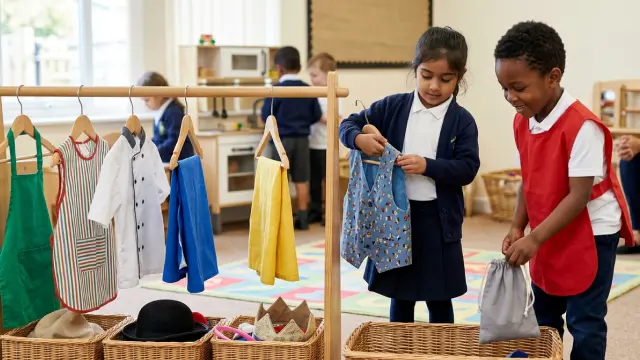
What dressing-up clothes does an EYFS setting need?
An EYFS setting needs a manageable, inclusive selection of dressing-up clothes that children can put on independently and use in many different stories. Prioritise open-ended fabrics, familiar occupational clothing, culturally respectful garments and simple accessories rather than relying only on complete costumes. Resources should be comfortable, washable, safely maintained and organised where children can choose them without unnecessary adult help.
Adelle Whitfield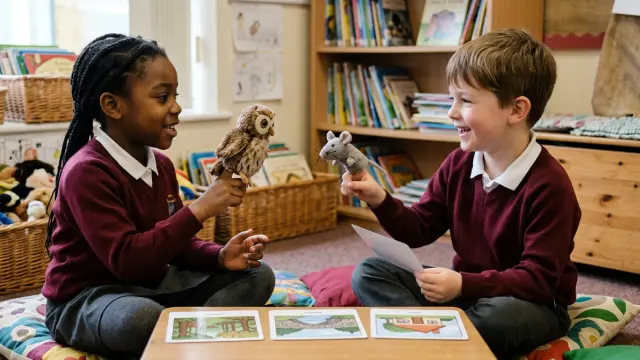
What puppets does a primary school need for storytelling?
A primary school needs a focused puppet collection that supports oral storytelling, retelling, vocabulary and pupil-created narratives. Include versatile people, animals and simple character types alongside puppets reflecting varied families and communities. Choose designs pupils can manipulate confidently and organise in accessible sets. Educational value depends more on purposeful teaching and repeated use than on owning a large collection.
Jack Clarke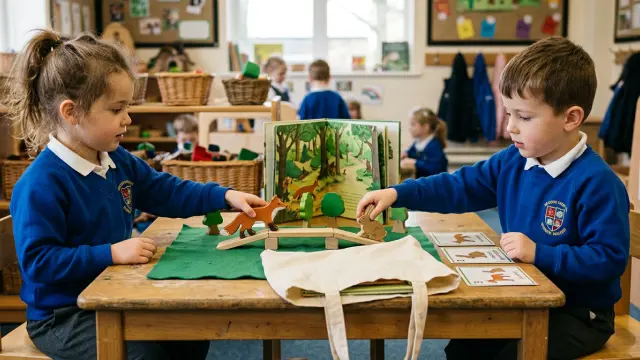
What story sacks does a school need for early literacy?
A school needs story sacks that help children understand, retell and discuss carefully chosen books, rather than a sack for every title. Each useful set contains a quality text plus a few purposeful props, characters and prompts. Prioritise repeated use, inclusive representation and easy organisation. Resources should extend shared reading without distracting children from the story itself.
Natalie McMunn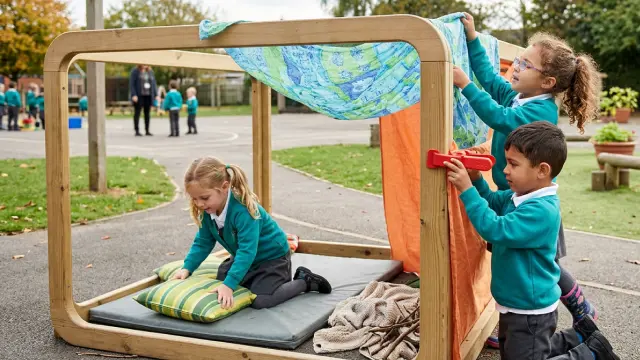
What den-building resources does an EYFS setting need?
An EYFS setting needs versatile den-building resources that children can move, combine and adapt safely. Useful provision includes lightweight fabrics, supervised-play clips, cushions, mats, crates, low frames and risk-assessed natural or recycled materials. The aim is not to create a perfect den for children, but to support planning, cooperation, physical development and imaginative play.
Christine Wheatcroft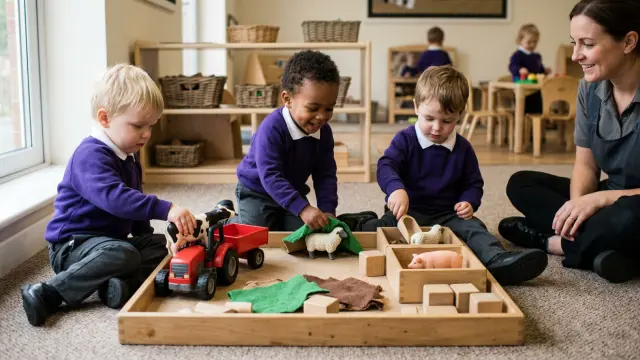
How to Set Up Small World Play for Different Age Groups
Small world play should reflect children’s development, interests and experience rather than relying on one fixed setup for every age group. Babies and toddlers need robust, easily handled resources for sensory exploration, while older Nursery and Reception children can manage more detailed figures, create narratives and construct their own environments. Careful observation should guide how provision develops.
Leah Smith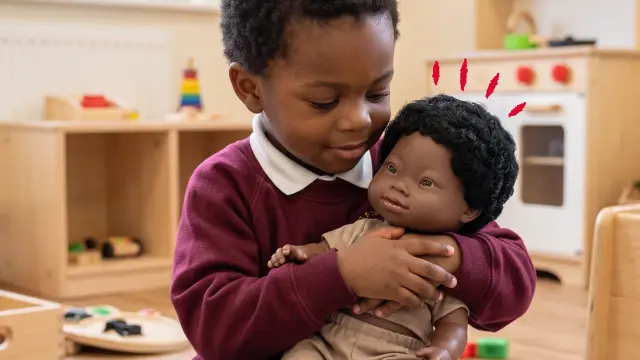
Dolls and Figures That Promote Diversity and Inclusion in EYFS
Diverse dolls and figures help children see themselves, their families and their communities represented in everyday play. A thoughtfully chosen collection can support belonging, empathy, communication and positive attitudes towards difference. In EYFS provision, these resources are most effective when they are available throughout the year and embedded naturally within meaningful, child-led play.
Adelle Whitfield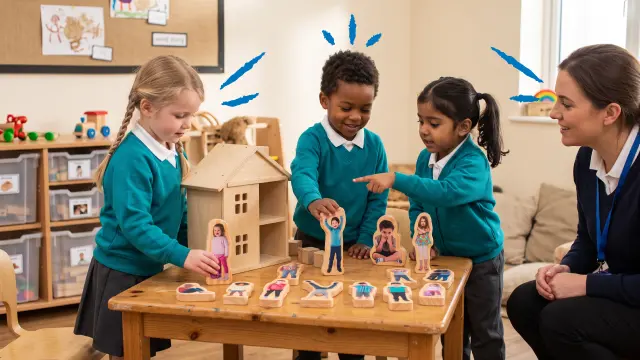
Resources That Help Children Understand Emotions in EYFS
Resources can help children understand emotions by making feelings easier to recognise, name, discuss and express. In the EYFS, stories, puppets, mirrors, emotion cards and role play can all support Personal, Social and Emotional Development. These resources work best alongside warm relationships, sensitive conversations and adults who help children manage feelings without judgement.
Carla Bonner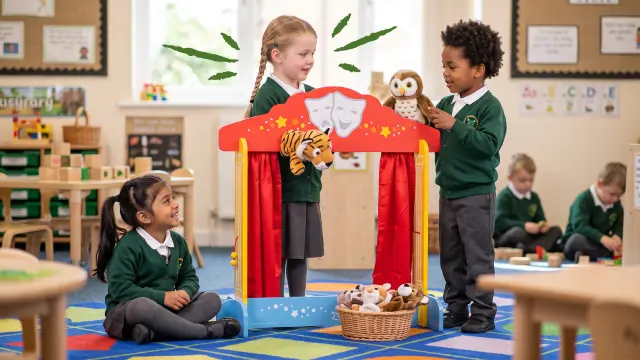
How Role Play Supports Child Development in EYFS
Role play supports child development by giving children meaningful opportunities to communicate, cooperate, imagine and make sense of their experiences. In the EYFS, well-planned pretend play can strengthen personal, social and emotional development, language, creativity and early literacy. Its value lies in children actively exploring ideas, relationships and familiar situations through play.
Carla Bonner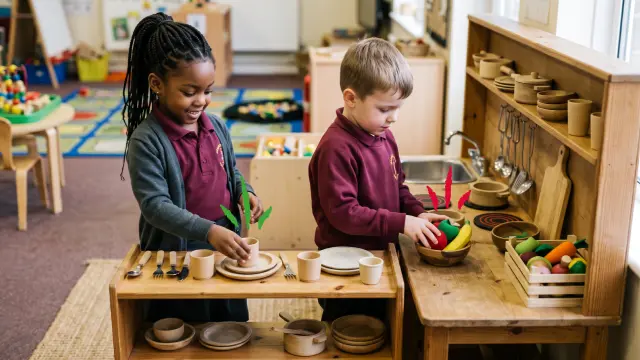
Role Play Kitchens for EYFS: What Does Your Setting Need?
A well-planned role play kitchen should support communication, imagination, social development and real-world learning experiences. The best EYFS role play kitchens are not necessarily the largest or most expensive. They are the ones that reflect children's interests, encourage meaningful interactions and provide opportunities for sustained imaginative play that supports learning across multiple areas of the EYFS curriculum.
Jack Clarke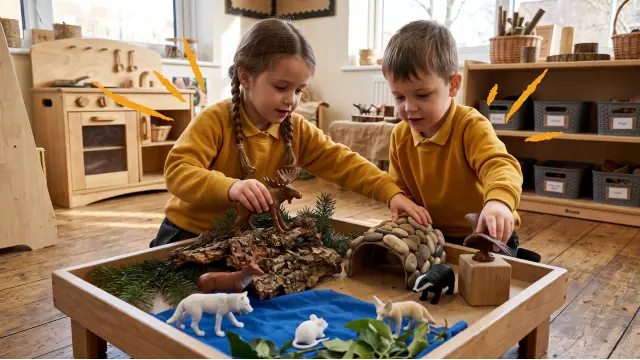
Small World Animal Figures: What Does an EYFS Class Need?
An EYFS class needs a carefully chosen range of small world animal figures that children can recognise, compare, classify and use imaginatively. A useful collection usually includes familiar farm animals, pets, woodland wildlife and creatures from contrasting habitats. Quality matters more than quantity: figures should be durable, age-appropriate, inclusive and versatile enough to support storytelling, vocabulary and exploration.
Rachel Pangburn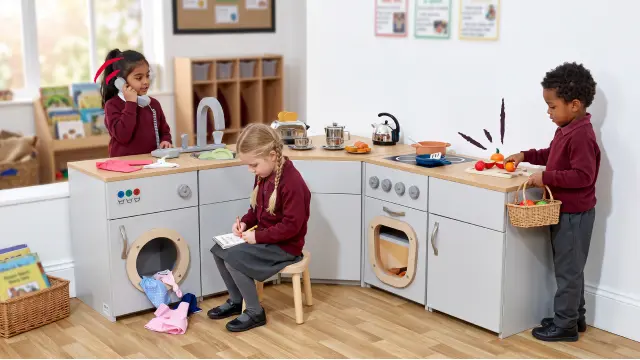
Setting Up a Home Corner in Your EYFS Classroom
A well-planned home corner helps children develop communication, language, social skills, creativity and emotional understanding through meaningful play. In EYFS classrooms, home corners provide opportunities for children to explore familiar experiences, build relationships, develop vocabulary and make sense of the world around them. When thoughtfully organised, they become one of the most valuable areas within continuous provision.
Adelle Whitfield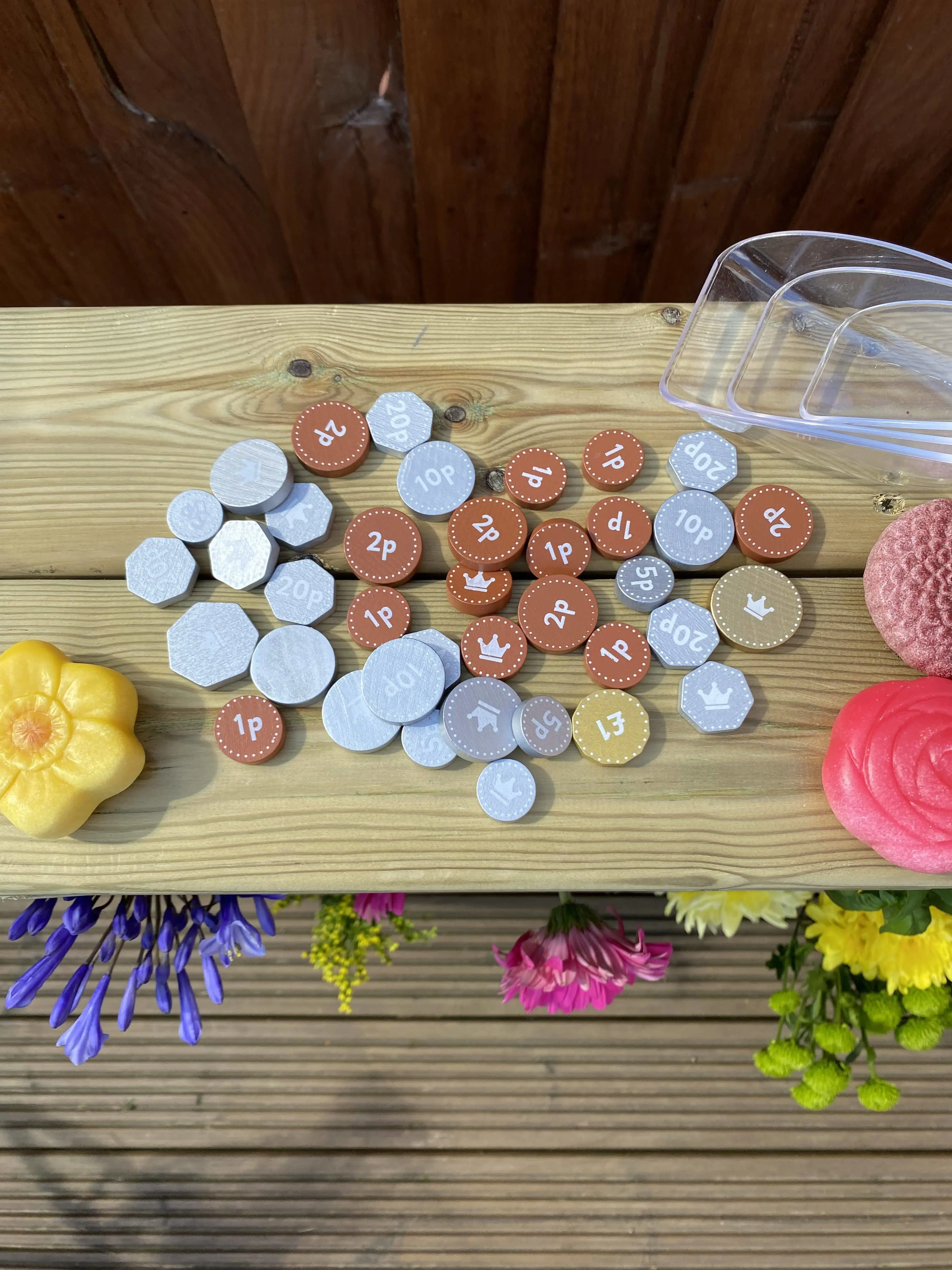
Learning Mathematics through Pretend Play
Pretend play is a useful way to introduce mathematics to early years. Find out how playing shops can explore maths in early years.
Frequently Asked Questions
What is small world play and why does it matter in EYFS?
Small world play involves children using figures, animals, vehicles, buildings and open-ended materials to create scenes and stories. It can provide meaningful opportunities for communication, imagination, social interaction, storytelling and understanding the world.
How many role play resources does a Reception classroom need?
There is no fixed quantity. A Reception classroom needs enough versatile resources to support shared play without overcrowding the area. Begin with a manageable collection and add or adapt resources in response to children’s interests and the way they use the provision.
What construction toys are suitable for EYFS and KS1?
Suitable resources may include blocks, interlocking sets, magnetic construction pieces, crates, planks, tubes and other open-ended building materials. Choices should reflect children’s ages, physical development, interests, available space and the manufacturer’s guidance.
How does role play support communication and language?
Role play can create reasons for children to listen, negotiate, explain, question and use new vocabulary. Adults can support this by observing, modelling language and joining sensitively without controlling the direction of the play.
Stay connected with Hope Early Years
Follow Hope Early Years for practical early years ideas, product inspiration, nursery procurement guidance and the latest education news.