

 Editor's pick
SEND and Inclusion: Hope Hub
Classroom resources can help create inclusive learning environments when they respond to an identified barrier, are introduced carefully and are reviewed with the pupil. Useful provision may include visual communication tools, adapted writing equipment, sensory resources, timers and alternative recording options. No resource suits every pupil, and equipment should complement high-quality teaching, reasonable adjustments and individual support. Explore SEND and inclusive classroom resources from Hope Education.
Explore SEND and Inclusion Guidance
Which Classroom Resources Help Schools Create Inclusive Learning Environments for Pupils with SEND?
Inclusive classroom resources should help reduce a specific barrier to learning, communication, physical access, participation or emotional regulation. The right choice will depend on the pupil, the activity and the classroom environment.
Resources may include visual timetables, now-and-next boards, adapted writing tools, accessible storage, sensory supports, timers, alternative seating and different ways for pupils to record their work.
Schools should avoid assuming that a resource will work simply because it is commonly associated with a particular need or diagnosis. Observe the barrier, listen to the pupil, agree how the resource will be used and review whether it improves meaningful participation.
This approach should form part of the school’s wider SEND provision and reasonable adjustments. It should not replace individual assessment, the graduated approach or advice from the SENCO and relevant professionals.
→ Related Guide: Explore inclusive classroom resources.
How Should Schools Choose Sensory Resources for Self-Regulation?
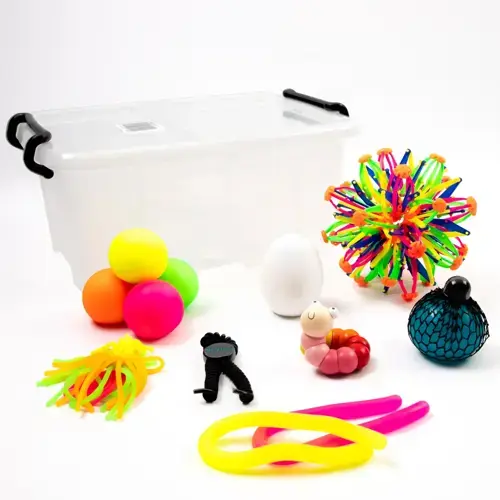
Sensory resources should be selected in response to an individual pupil’s preferences and observed needs. A tactile object, movement opportunity or quieter workspace may help one pupil participate, while the same provision may distract or cause discomfort for another.
→ Related Guide: Explore sensory regulation resources.
Which Resources Support Communication and Participation?
Communication resources can help pupils understand routines, express preferences, follow instructions and participate more independently. These may include visual timetables, now-and-next boards, choice boards, communication fans, symbol-supported instructions and objects of reference.
→ Related Guide: Explore communication resources.
How Can Fine-Motor Resources Improve Classroom Access?
Fine-motor resources may help pupils access writing, cutting, drawing, construction and practical classroom activities. Possible adjustments include pencil grips, thicker writing tools, adapted scissors, sloping writing boards, non-slip mats and resources with larger handles.
→ Related Guide: Explore fine-motor and adapted classroom resources.
Which Resources Can Support Attention and Task Organisation?
Resources that make tasks predictable and manageable may support pupils who experience barriers relating to attention, working memory or executive functioning.
→ Related Guide: Explore attention and organisation resources.
How Can Classroom Environments Reduce Sensory Barriers?
An inclusive environment considers how layout, sound, lighting, movement, display and access to resources may affect different pupils. Small environmental adjustments can sometimes remove barriers without separating a pupil from their peers.
→ Related Guide: Download the Inclusive Classroom Resource and Environment Audit.
What Are Adaptive Classroom Resources?
Adaptive resources are tools or adjustments that make an activity, environment or method of communication more accessible. Examples may include adapted scissors, easy-grip writing tools, enlarged materials, alternative keyboards, non-slip mats, accessible storage and different methods for recording work.
→ Related Guide: Explore adaptive classroom resources.
How Should Schools Match Resources to Pupils’ Needs?
Use this table to begin a conversation about barriers and possible classroom support. It is not a diagnostic tool or a fixed list of resources for particular conditions.
| Observed barrier or need | Questions for the school to consider | Resources or adjustments to explore | Important cautions |
|---|---|---|---|
| Sensory regulation | Which sounds, movements, textures, lighting conditions or busy periods appear to affect participation? | Calm spaces, movement opportunities, tactile tools, ear defenders or alternative seating | Avoid assuming that all pupils with the same diagnosis have the same sensory needs. |
| Communication | Does the pupil understand instructions, communicate choices and know what will happen next? | Visual timetables, now-and-next boards, choice boards, objects of reference or symbol-supported information | Communication systems should be agreed with the pupil and relevant professionals and used consistently. |
| Fine-motor access | Is holding, controlling or using standard classroom equipment creating a barrier? | Pencil grips, sloping boards, adapted scissors, larger-handled tools or non-slip mats | Check comfort and effectiveness. Seek occupational therapy advice where appropriate. |
| Attention and task completion | Is the pupil clear about the task, its duration and when it will finish? | Visual timers, task boards, short instructions, reduced visual clutter and planned movement breaks | Resources should support participation rather than enforce compliance or remove necessary breaks. |
| Reading and recording | Is handwriting, decoding or recording knowledge preventing the pupil from showing what they understand? | Alternative recording methods, keyboards, enlarged materials, coloured overlays or audio resources | Select adjustments according to assessed need rather than applying the same approach to every pupil. |
| Physical access | Can the pupil reach, move around and use the learning environment safely and independently? | Accessible storage, adjustable furniture, adapted equipment and uncluttered routes | Consider the school’s accessibility plan and seek specialist advice where required. |
| Emotional regulation | Are there predictable situations in which the pupil becomes overwhelmed or unable to participate? | Emotion scales, calm spaces, visual routines, regulation plans and trusted-adult support | Regulation resources must never be used as punishment, isolation or a substitute for relational support. |
Inclusive Classroom Resource and Environment Audit
Download the complete Inclusive Classroom Resource and Environment Audit.
Featured SEND and Inclusion Guides

Explore SEND and inclusive classroom resources from Hope Education with free delivery options available.
Shop SEND resources
Using Visual Timetables in the Classroom | Practical SEND Support Simon Hunt
Discover how a Year 3/4 teacher uses visual timetables to support routines, reduce anxiety and build independence. Practical classroom ideas using the LDA Magnetic Visual Timetable.
Simon Hunt
The Inclusive Mainstream Fund 2026–27: A Practical Roadmap for Schools Developing Their Inclusion Strategy
The Inclusive Mainstream Fund (IMF) provides mainstream schools with additional funding to strengthen inclusive practice, remove barriers to learning and provide earlier support for children with additional needs.
Natalie McMunn
Children’s Mental Wellbeing in Schools: A Simple Classroom Strategy That Works
Imogen Buxton-Pickles is a primary PE specialist and founder of imoves, an all-in-one PE and active learning platform that empowers teachers to deliver PE confidently.
Imogen Buxton-Pickles
Children’s Mental Health Week: Express yourself worksheet
A free downloadable resource for parents or teachers that helps a child explore their feelings and emotions, and learn to express them.
Creating Inclusive Classrooms
Creating inclusive classrooms is not just a statutory requirement but a key part of effective teaching. Check out our blog here which explores how you can create an inclusive classroom.

SEND Reform in 2026: Why the Conversation Must Stay Focused on Readiness
The debate around support for children with Special Educational Needs and Disabilities (SEND) has returned to the centre of national attention in early 2026. Read here to find out more.

Expert tips for creating inclusive environments
We asked three SEND experts for real life examples of how they have created an inclusive environment and the impact this has had on the children in the setting. Read on to find out ...

The Benefits of the Outdoors for SEND Children in Nurseries
Unlock a magical space, for children with SEND, which allows them to embrace the natural environment.

Creating an Inclusive Classroom
Effective strategies in creating a classroom where all learners can thrive.

Sign language in the classroom
Explore sign language lessons that can contribute to cognitive development in the classroom

5 steps to managing big emotions
Help your pupils with their feelings by using our 5 steps to managing big emotions.

Spot Signs Of Anxiety In Children
Discover the signs of anxiety in children in our blog & how to help.
Frequently Asked Questions
Which resources can help pupils with SEND in the classroom?
Useful resources may include visual timetables, communication tools, adapted writing equipment, sensory supports, timers and alternative recording options. Selection should begin with the individual barrier rather than a diagnosis or a standard equipment list.
Are sensory resources suitable for every pupil with SEND?
No. Pupils can have different preferences and responses, including pupils with the same diagnosis. Sensory resources should be introduced carefully, used for an agreed purpose and reviewed with the pupil.
Can a school use a fidget tool to improve behaviour?
A fidget tool should be used to support an identified regulation or access need, not simply to enforce compliance. Staff should agree its purpose, explain how it can be used and review whether it supports participation.
Do classroom resources replace professional SEND assessment?
No. Classroom resources can form part of reasonable adjustments and SEND provision, but they do not replace assessment, the graduated approach or advice from the SENCO and relevant professionals.
How often should SEND classroom resources be reviewed?
Review them at an agreed interval and whenever the pupil’s needs, classroom context or curriculum demands change. Consider pupil feedback and evidence of whether the resource improves access, independence or participation.
Stay connected with Hope Early Years
Follow Hope Early Years for practical early years ideas, product inspiration, nursery procurement guidance and the latest education news.