

 Editor's pick
Sensory and Messy Play Resources for EYFS: A Practical Guide
Sensory and messy play equipment should give children safe, open-ended opportunities to explore materials, movement, texture and cause and effect. A well-planned EYFS provision may include sand and water resources, loose parts, mud kitchen equipment, sensory toys and accessible tools that reflect children’s ages, interests, developmental stages and individual needs.
Sensory and Messy Play Categories
What sand play equipment does an EYFS setting need?
A useful sand-play area usually includes a suitable tray or sandpit, play sand, scoops, containers, funnels, sieves, moulds and tools for digging, pouring and transporting. Practitioners can vary the resources according to children’s ages, interests and current learning.
Open-ended accessories allow children to fill, empty, compare, build and create their own play ideas. Settings should also consider access height, available space, storage, supervision and how sand will be covered and maintained between sessions. Resources should be checked regularly and selected with the ages and needs of the children using them in mind.
→ Related guide: What Sand Play Equipment Does an EYFS Setting Need?
What water tray accessories does an EYFS class need?
Water-play provision can begin with a stable, accessible water tray and a small collection of versatile accessories. Jugs, cups, funnels, tubing, droppers, scoops, floating objects and water wheels can encourage children to pour, transfer, compare, investigate and test their ideas.
Rather than placing every accessory in the tray at once, practitioners can rotate a smaller selection according to children’s interests. This can make the activity easier to access and gives adults clearer opportunities to introduce useful vocabulary. Settings should plan for safe water depth, floor protection, hand hygiene, regular water changes and appropriate supervision.
→ Related guide: What Water Tray Accessories Does an EYFS Class Need?
What are loose parts and how are they used in EYFS?
Loose parts are open-ended objects and materials that children can move, combine, arrange, transport and use in different ways. Examples may include wooden discs, rings, reels, stones, fabric pieces, tubes, crates, containers and natural materials selected for supervised educational use.
Because loose parts do not have one fixed purpose, children can use them to create patterns, build structures, represent ideas and develop their own play. Practitioners should introduce manageable collections, model safe handling without directing every outcome and observe how children use the resources. Age suitability, choking risks, hygiene, storage and individual needs must always be considered.
→ Related guide: What Are Loose Parts and How Are They Used in EYFS?
What accessories does a school mud kitchen need?
A mud kitchen can be equipped with robust utensils and containers that encourage mixing, pouring, collecting, transporting and imaginative play. Useful accessories may include bowls, pans, spoons, scoops, jugs, sieves, whisks, measuring containers and natural loose parts.
Settings do not need to provide everything at once. A smaller, well-organised collection can be easier for children to access independently and simpler for practitioners to check and clean. Storage hooks, labelled containers and a nearby source of water can help children manage the area. Practitioners should establish clear expectations for safe use, handwashing, cleaning and the materials children may collect.
→ Related guide: What Accessories Does a School Mud Kitchen Need?
What sensory toys do EYFS and nursery settings need?
The most appropriate sensory toys depend on the children, the setting and the purpose of the provision. A balanced collection might include tactile objects, visually engaging resources, sound-making items, movement resources and tools for filling, pouring or manipulating materials.
Practitioners should choose resources in response to observed interests and individual needs rather than assuming every child will find the same experience helpful. Some children may actively seek particular sensations, while others may avoid them or become overwhelmed. Offer choice, introduce new resources gradually and provide a quieter alternative. Sensory resources should complement responsive teaching and individual support, not be presented as treatments.
→ Related guide: What Sensory Toys Do EYFS and Nursery Settings Need?
How do you set up a sensory room in a primary school?
A school sensory room should have a clearly defined purpose based on pupils’ needs. Begin by considering who will use the room, how it will be supervised and whether it is intended to provide calm, controlled exploration, movement opportunities or support with regulation.
Avoid filling the space with too many lights, sounds, colours or textures. A carefully chosen collection is often more useful than an overcrowded room. Include suitable storage, clear circulation routes and resources that can be introduced or removed as needed. Schools should involve their SENCO and relevant professionals when planning individual provision and review how pupils respond to the space.
→ Related guide: How Do You Set Up a Sensory Room in a Primary School?
How can sensory and messy play support the seven areas of learning?
The Early Years Foundation Stage identifies seven interconnected areas of learning and development. Sensory and messy play can provide useful contexts in which practitioners support these areas, but simply providing a resource does not guarantee a particular learning outcome. The quality of the environment, adult interaction and response to individual children remain important.
| EYFS area of learning | How sensory and messy play may contribute | Example opportunities |
|---|---|---|
| Communication and language | Children can hear, use and develop vocabulary while describing materials, actions and ideas. | Naming textures, discussing changes and explaining what they are making. |
| Personal, social and emotional development | Shared activities can support choice, cooperation, turn-taking and confidence. | Sharing tools, negotiating space and choosing preferred resources. |
| Physical development | Handling tools and materials can provide opportunities to practise gross- and fine-motor movements. | Scooping, squeezing, pouring, stirring, digging and transporting. |
| Literacy | Sensory experiences can provide meaningful contexts for mark-making, storytelling and new vocabulary. | Making marks in sand, following picture prompts and creating story settings. |
| Mathematics | Children can explore quantity, capacity, size, shape, pattern and comparison through practical play. | Filling containers, comparing amounts, sorting objects and creating patterns. |
| Understanding the world | Children can investigate materials, natural processes and cause and effect. | Exploring floating and sinking, mixing materials and observing changes. |
| Expressive arts and design | Open-ended materials can support imagination, experimentation and the representation of ideas. | Creating transient art, imaginary recipes, models and small-world scenes. |
EYFS Sensory and Messy Play Area Setup Checklist
Use this checklist to plan or review sensory and messy-play provision in a nursery, Reception class or primary school.
Practical Setup Guidance & Range Spotlight
Explore comprehensive guidance covering EYFS area setup, safety, maintenance, inclusion, and Hope Education range selection below.
1. How should an EYFS sensory and messy-play area be organised?
Plan the space: Choose a location with enough room for children to move safely around the activity. Consider floor protection, access to water, handwashing, drying facilities and whether the provision will be indoors or outdoors.
Select resources carefully: Begin with a small collection linked to children’s ages, interests and needs. Too many resources can make an activity difficult to navigate and may be overwhelming for some children.
Support independent access: Use child-height storage, picture labels and clearly organised containers where appropriate. Children should be able to find, use and return suitable resources with increasing independence.
Rotate resources purposefully: Change or add resources when this extends children’s interests or introduces a worthwhile new possibility. Resources should not be rotated simply to make the area look different.
Plan adult interaction: Give children time to explore independently. Adults can observe, model vocabulary, ask occasional questions and help children develop their ideas without taking control of the activity.
Manage cleaning and maintenance: Create a clear routine for checking, cleaning, drying and storing resources. Replace damaged items and follow the manufacturer’s instructions for care and age suitability.
Make provision inclusive: Offer different ways to participate. Children should be able to observe before joining, use tools instead of touching materials directly or choose an alternative activity if an experience feels uncomfortable.
2. Hope Education sensory and messy-play resources
Hope Education provides resources for sand play, water play, loose-parts exploration, messy play, outdoor provision and sensory learning. When selecting resources, settings should consider:
- The ages and developmental stages of the children
- The purpose of the provision
- Opportunities for open-ended exploration
- Accessibility and independent use
- Indoor or outdoor suitability
- Available storage and cleaning arrangements
- Durability for regular educational use
- Individual sensory preferences and SEND requirements
- Manufacturer guidance and recommended age ranges
The best choice is not necessarily the resource with the greatest number of features. It is the one that fits the children, the environment and the intended learning experience.
Featured articles

Ready to order? Browse the full sensory and messy play range with free next-day delivery on orders over £40.
Shop sensory and messy play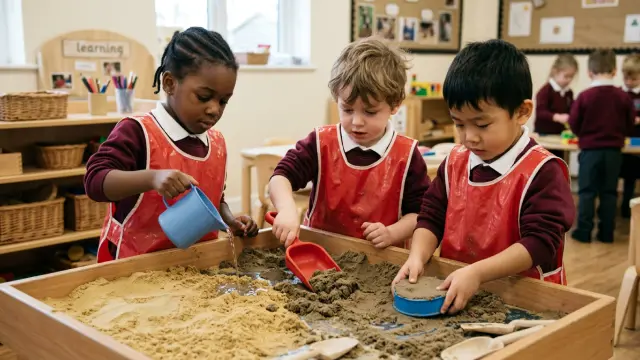
Wet Sand vs Dry Sand: What’s the Difference for EYFS?
Dry sand is loose, flowing and ideal for pouring, sieving and exploring capacity, while wet sand can be moulded, shaped and used for building. Both offer valuable but different EYFS learning opportunities. Providing children with access to each supports sensory exploration, physical development, early maths, communication and imaginative play through practical, child-led experiences.
Rachel Pangburn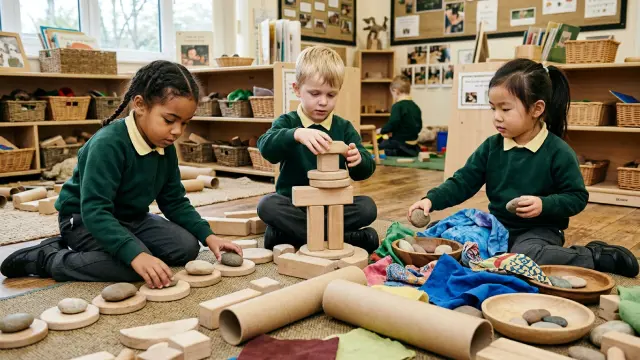
Loose Parts and Heuristic Play: A Practitioner’s Guide
Loose parts and heuristic play give young children open-ended opportunities to investigate, combine, transport and organise everyday objects. Rather than working towards a predetermined result, children can follow their curiosity, test ideas and discover how materials behave. Thoughtful resource selection, careful observation and appropriate supervision help practitioners turn simple objects into rich Early Years learning experiences.
Leah Smith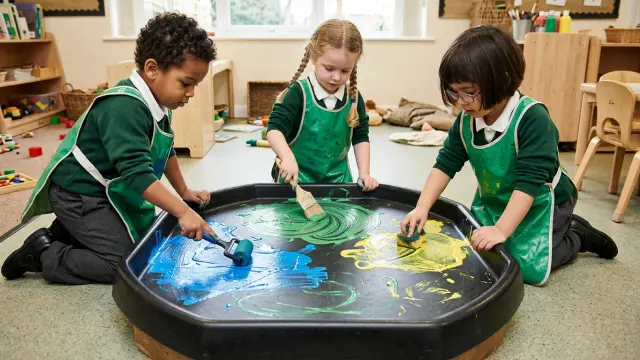
What Is a Tuff Tray and How Is It Used in EYFS Settings?
A tuff tray is a large, shallow activity tray used to contain sensory, messy, creative and small-world play. In EYFS settings, it provides a defined space where children can investigate materials, develop physical skills, use their imagination and explore early concepts. Its versatility makes it a valuable part of carefully planned continuous provision.
Rachel Pangburn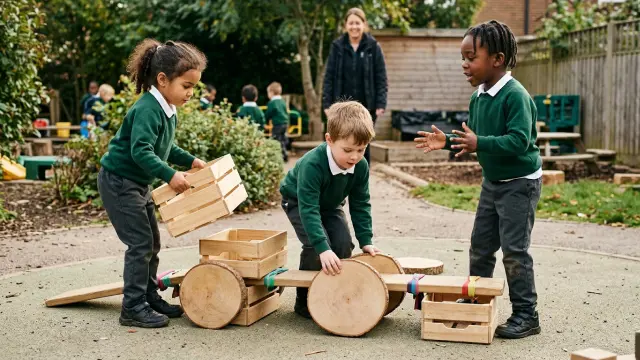
Loose Parts Play in Early Years: Benefits, Ideas and Setup Tips
Loose parts play gives children adaptable objects they can move, combine, arrange and transform in their own ways. In Early Years provision, a carefully chosen collection can support creativity, language, problem-solving, physical development and early mathematical thinking. Effective provision begins with safe, accessible materials, clear routines and adults who observe and extend play without controlling it.
Carla Bonner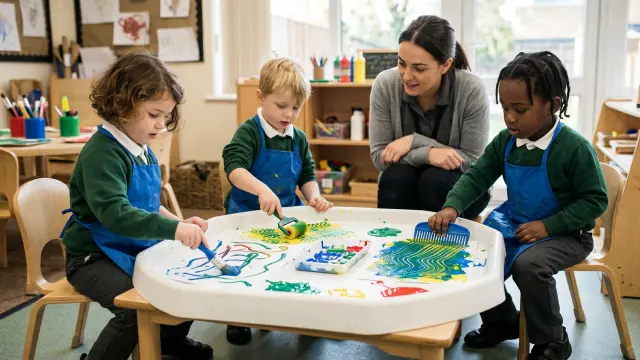
How Mark-Making in Sand and Messy Play Supports Early Literacy
Mark-making in sand and messy play supports early literacy by helping children connect movements, symbols, sounds and meaning through practical exploration. Drawing lines, making patterns and representing ideas can strengthen the physical control, language and confidence needed for writing. These experiences are most effective when they remain playful, purposeful and connected to children’s communication.
Rachel Pangburn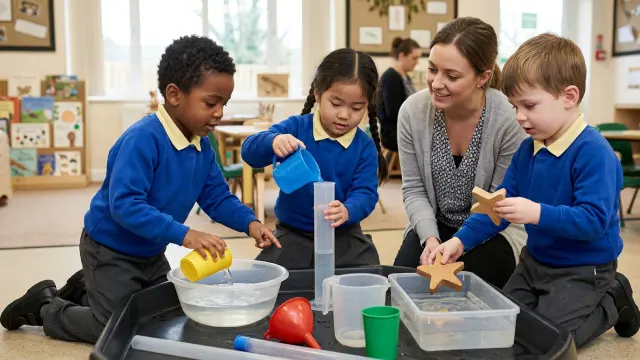
How Water Play Supports Child Development in EYFS
Water play supports child development in EYFS by giving children practical opportunities to pour, fill, transport, investigate and solve problems. These experiences can strengthen physical coordination, communication, early mathematical understanding, scientific thinking and cooperative play. With thoughtful adult support and suitable resources, a water area can become a purposeful, child-led part of continuous provision.
Rachel Pangburn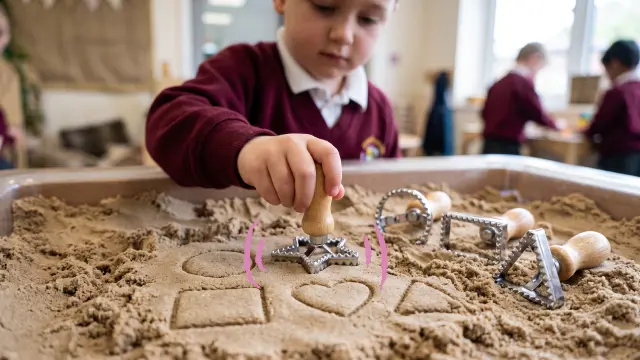
How Sand Play Supports the Seven EYFS Areas of Learning
Sand play can support all seven areas of learning in the EYFS by giving children a practical, open-ended way to communicate, collaborate, investigate, create and solve problems. With thoughtful adult interaction and carefully chosen resources, a familiar sand area can become purposeful continuous provision that responds to children’s interests and supports development across the whole curriculum.
Carla Bonner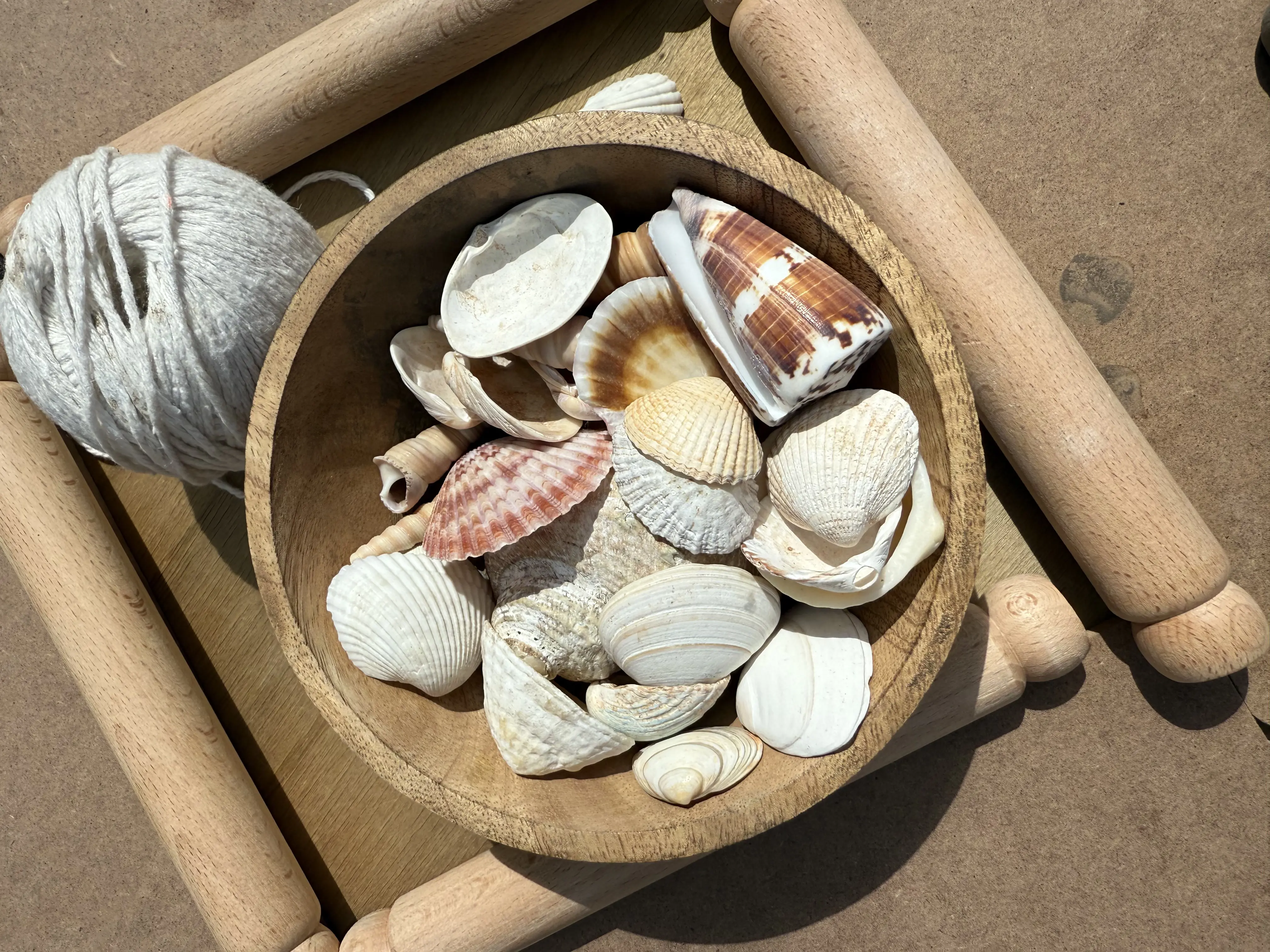
3 Sensory Play Activities for Early Years: Part 2
Simple activities like summer water play, ice painting, and creating seashell necklaces encourage children to explore textures, colors, and physical changes while driving curiosity, creativity, and self-led discovery aligned with EYFS development goals.
Katie Taylor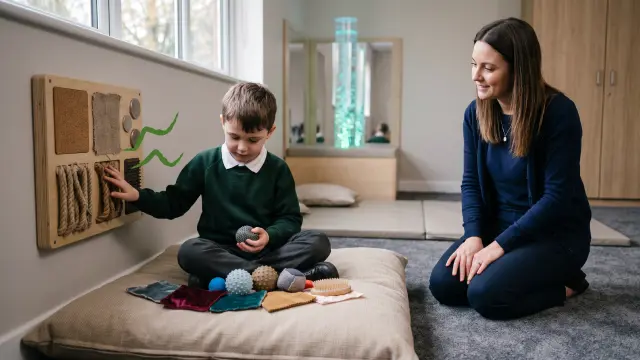
How to Set Up a Sensory Room in a Primary School
A primary school sensory room should be a carefully planned space that helps identified pupils regulate sensory input and return to learning. Begin with pupils’ needs, professional advice and clear intended outcomes before choosing equipment. The most effective rooms are safe, uncluttered, supervised and adaptable, rather than filled with as many sensory products as possible.
Natalie McMunn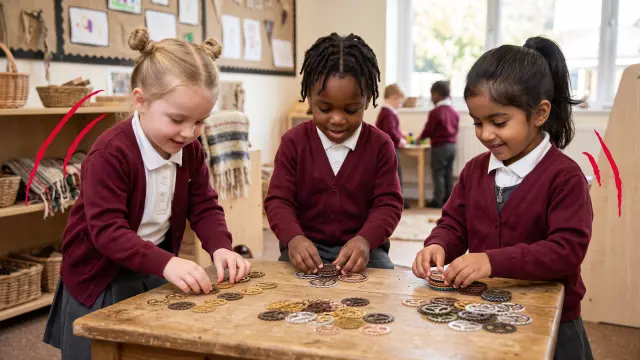
Loose Parts Play in EYFS: What It Is and How to Use It
Loose parts play gives children open-ended materials that they can move, combine, arrange, redesign and use in many different ways. From wooden discs and pebbles to tubes, blocks and fabric, loose parts encourage children to follow their ideas, solve problems and create their own play without being restricted to one predetermined outcome.
Adelle Whitfield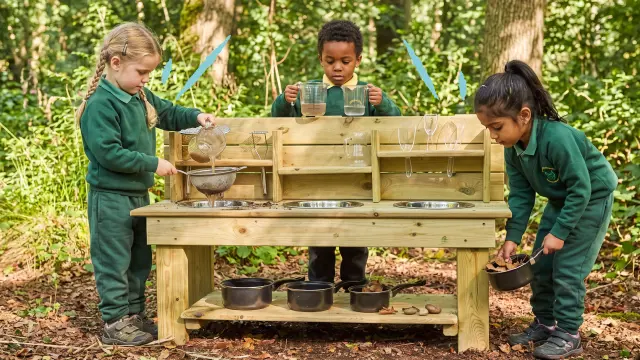
Mud Kitchens for Schools: What Accessories Do You Need?
Mud kitchens are most effective when they include a carefully chosen range of accessories that encourage exploration, creativity, communication and problem-solving. In EYFS settings, resources such as pots, pans, measuring tools, natural materials and water-play equipment help children engage in meaningful outdoor learning experiences that support multiple areas of development while promoting child-led play.
Rachel Pangburn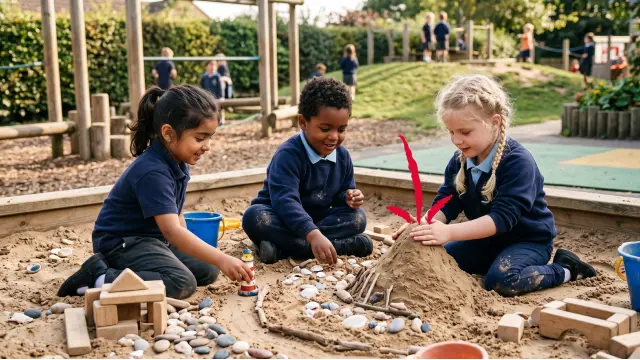
Sand Play in EYFS: What Equipment Does Your Setting Need?
Sand play is a valuable part of Early Years provision, supporting physical development, communication, creativity, problem-solving and understanding of the world. A well-resourced sand area gives children opportunities to explore, investigate and learn through hands-on experiences. Choosing the right equipment helps practitioners create engaging, safe and developmentally appropriate sand play experiences that support the aims of the EYFS.
Adelle Whitfield
Frequently Asked Questions
What sensory and messy play equipment does an EYFS setting need?
Most settings benefit from a balanced selection of sand and water resources, containers, scoops, funnels, loose parts, messy-play tools and sensory objects. The exact provision should reflect the children’s ages, interests, developmental stages and individual needs, as well as the available space, storage and cleaning arrangements.
What sand play equipment does an EYFS setting need?
A basic sand-play provision may include a suitable tray or sandpit, play sand, scoops, containers, funnels, sieves, moulds and digging tools. Settings should choose age-appropriate resources, provide suitable supervision and establish routines for covering, checking and maintaining the sand.
What are loose parts and how are they used in EYFS?
Loose parts are open-ended objects and materials that children can move, combine and use in different ways. They can support exploration, construction, pattern-making, imaginative play and problem-solving. Resources must be selected and supervised according to children’s ages and needs.
What sensory toys do EYFS and nursery settings need?
There is no single list that suits every setting or child. Practitioners should select tactile, visual, sound-based or movement resources in response to observed interests and individual needs. Children should have choices, including the option not to take part in a particular sensory experience.
How do you set up a sensory room in a primary school?
Start by defining the room’s purpose and the needs of the pupils who will use it. Choose a manageable range of resources, avoid unnecessary sensory overload, plan supervision and storage, and review pupils’ responses. The SENCO and relevant professionals should contribute where the room forms part of individual support.