
Threading progression
Quick Answer
Threading skills develop in stages, from babies passing items between their hands to stacking, guiding rings onto sticks and threading chunky beads and laces. Children then move on to smaller items such as feathers and pipe cleaners. Each stage builds hand eye coordination and fine motor skills.
- Babies pass an item from one hand to the other and then release them intentionally. These moments build the foundations for threading as they grow older.
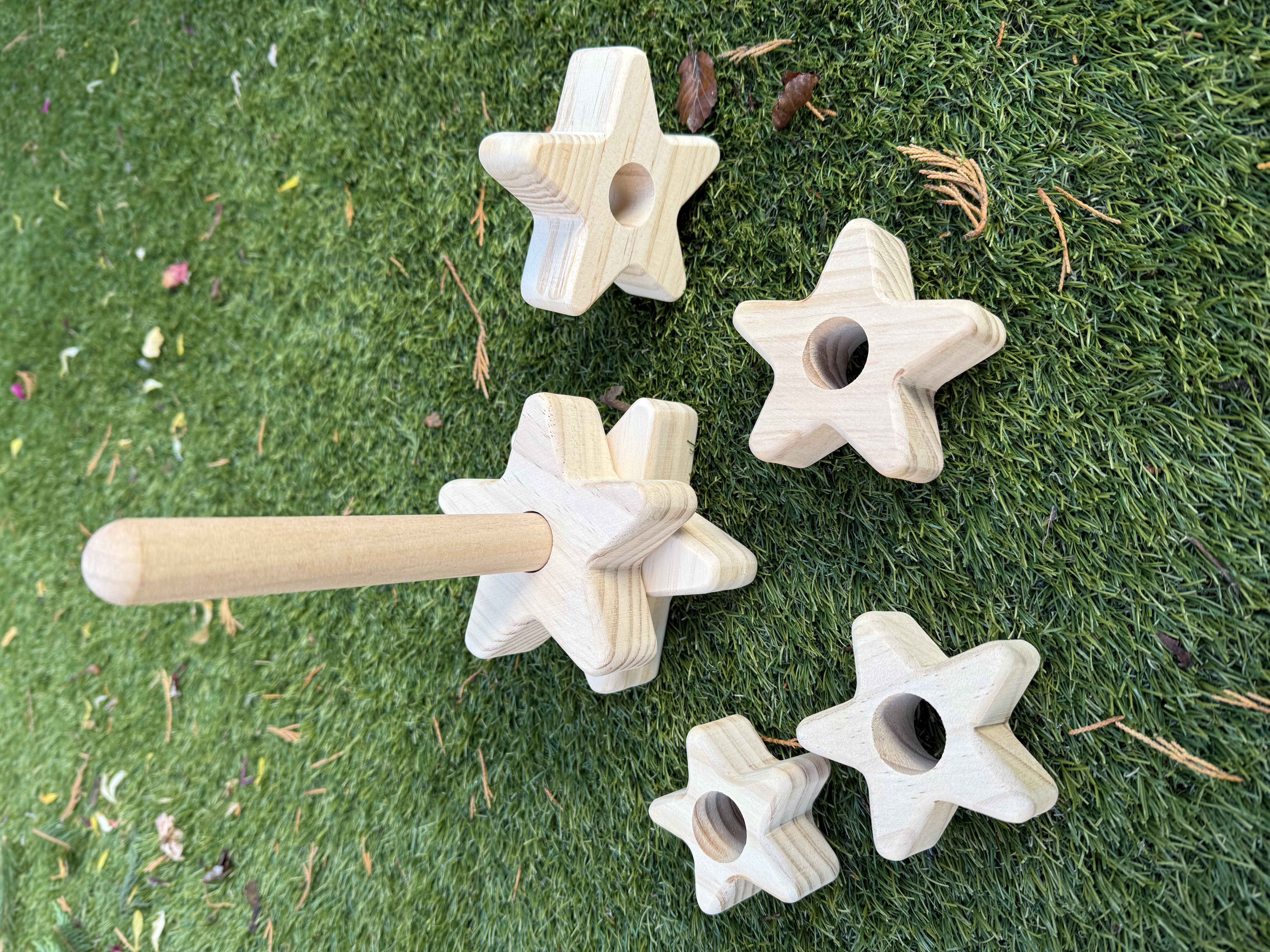
- Start with chunkier items for young children to grasp such as the stars on this stacker. They are perfect for little hands to grasp and manoeuvre onto the stacking base. This activity helps with how to position and guide objects onto something else.
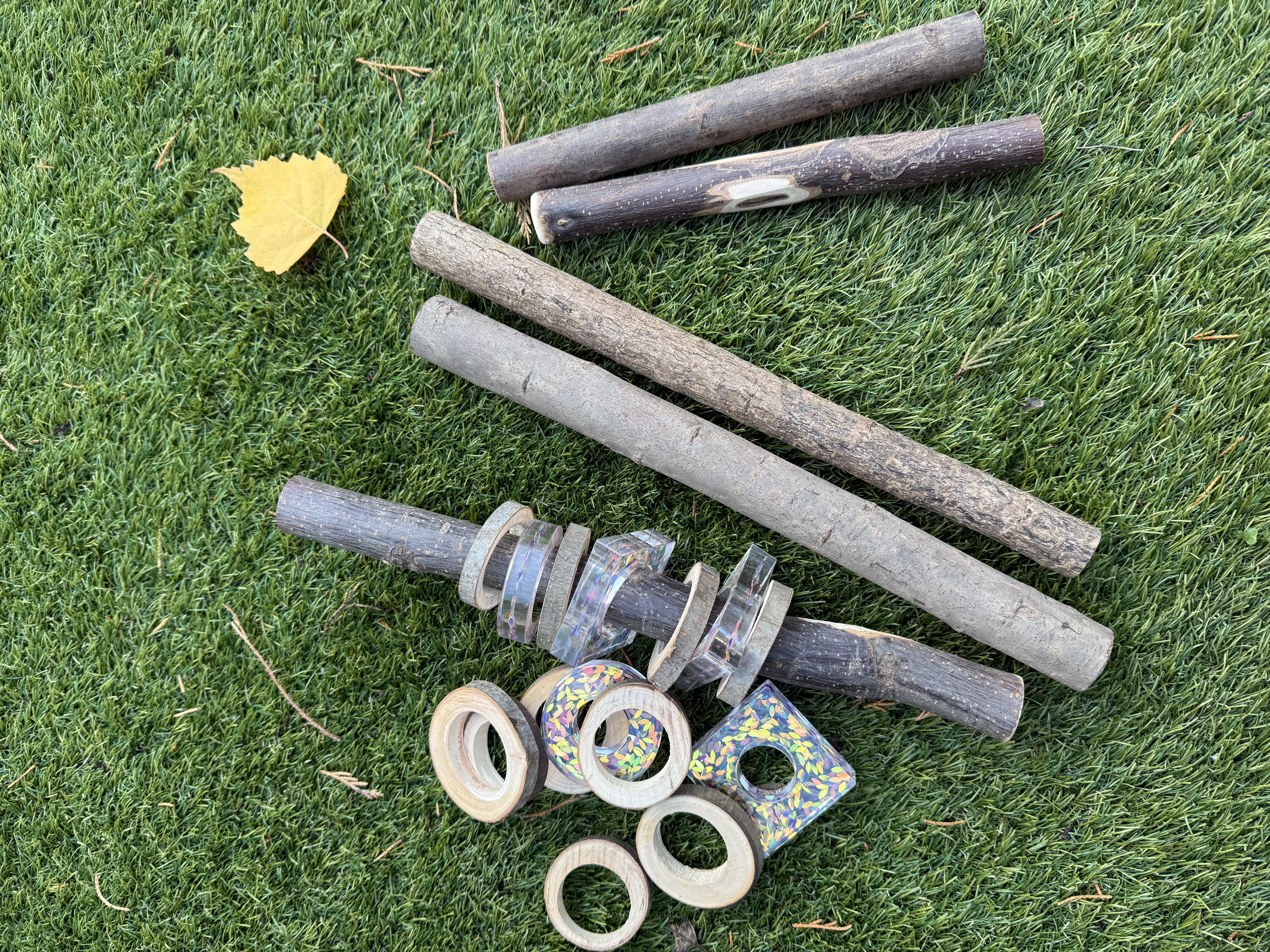
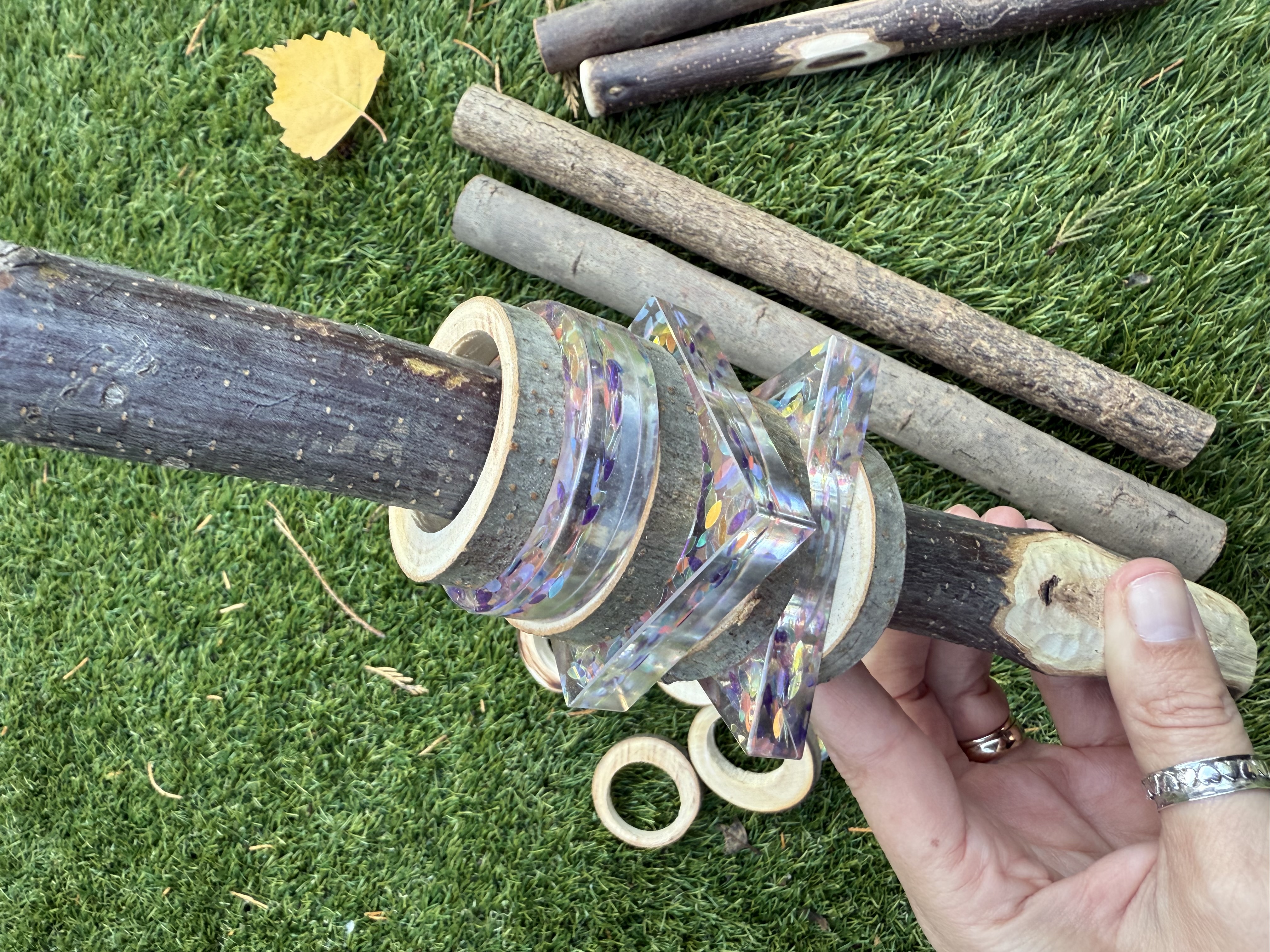
- The logs and chunky beads help children to learn to coordinate both hands. By holding the stick steady in one hand and guiding the ring with the other hand in a palmar grip, children are building on the foundations from the stacking activity. This helps with hand eye coordination.
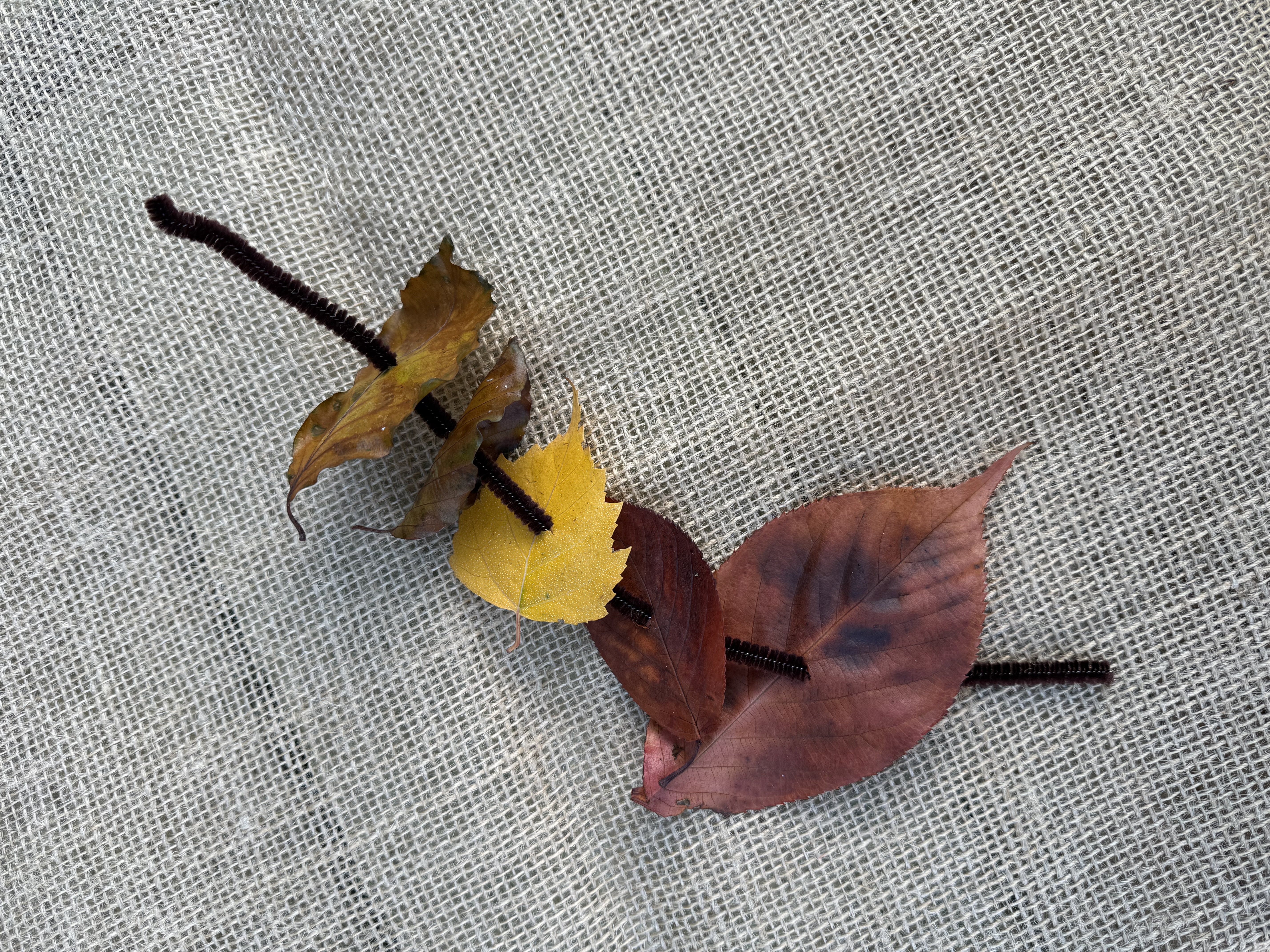
- Threading with precision and accuracy using laces and chunky beads with a large hole or items such as pasta tubes. You could also use chunky needles and string to thread leaves or beads onto. Instead of using a palmar grip to thread, children have moved onto a more intricate way of threading using their fine motor skills. They need to be able to manipulate the string and use their fingers with greater precision.
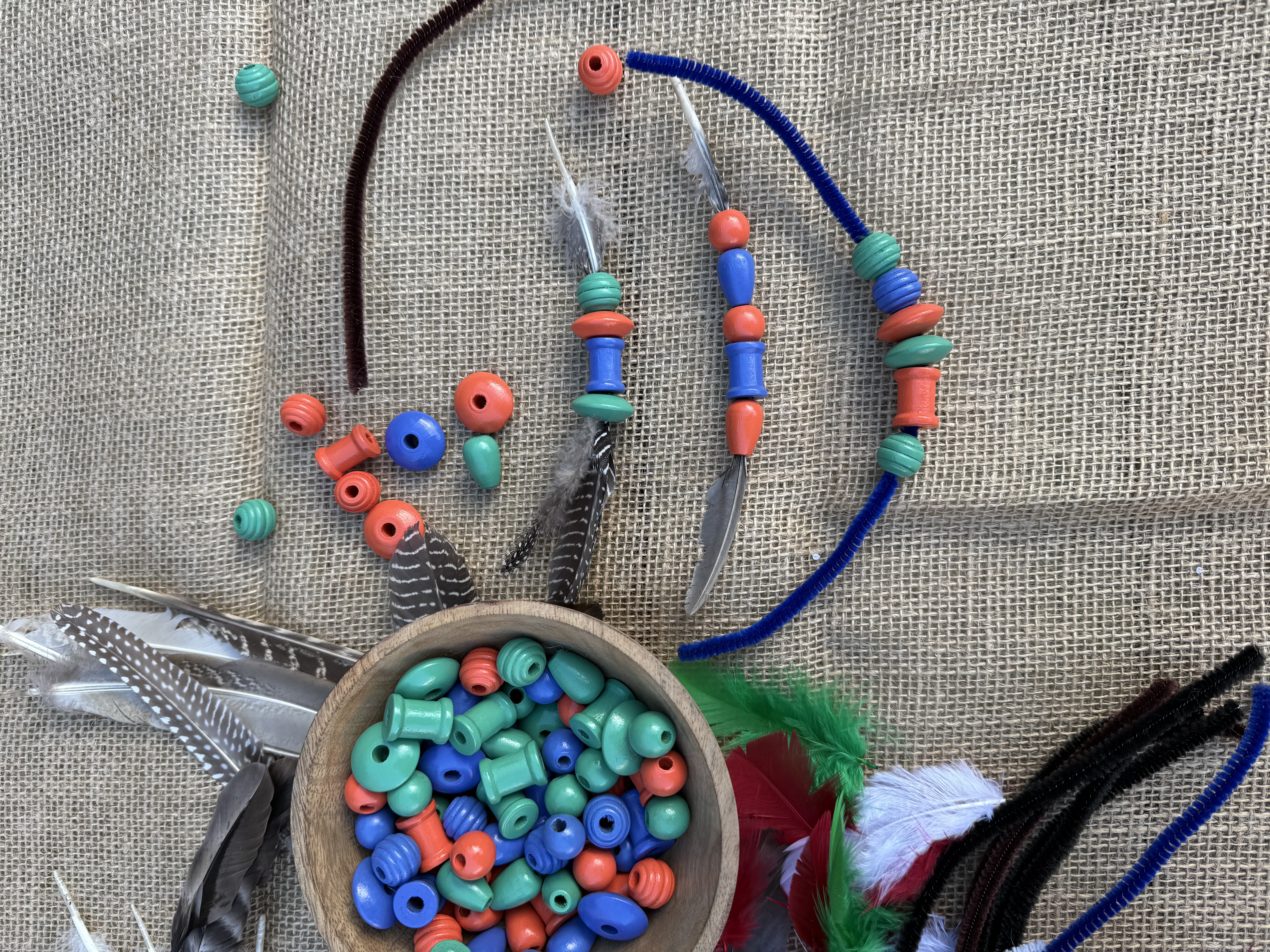
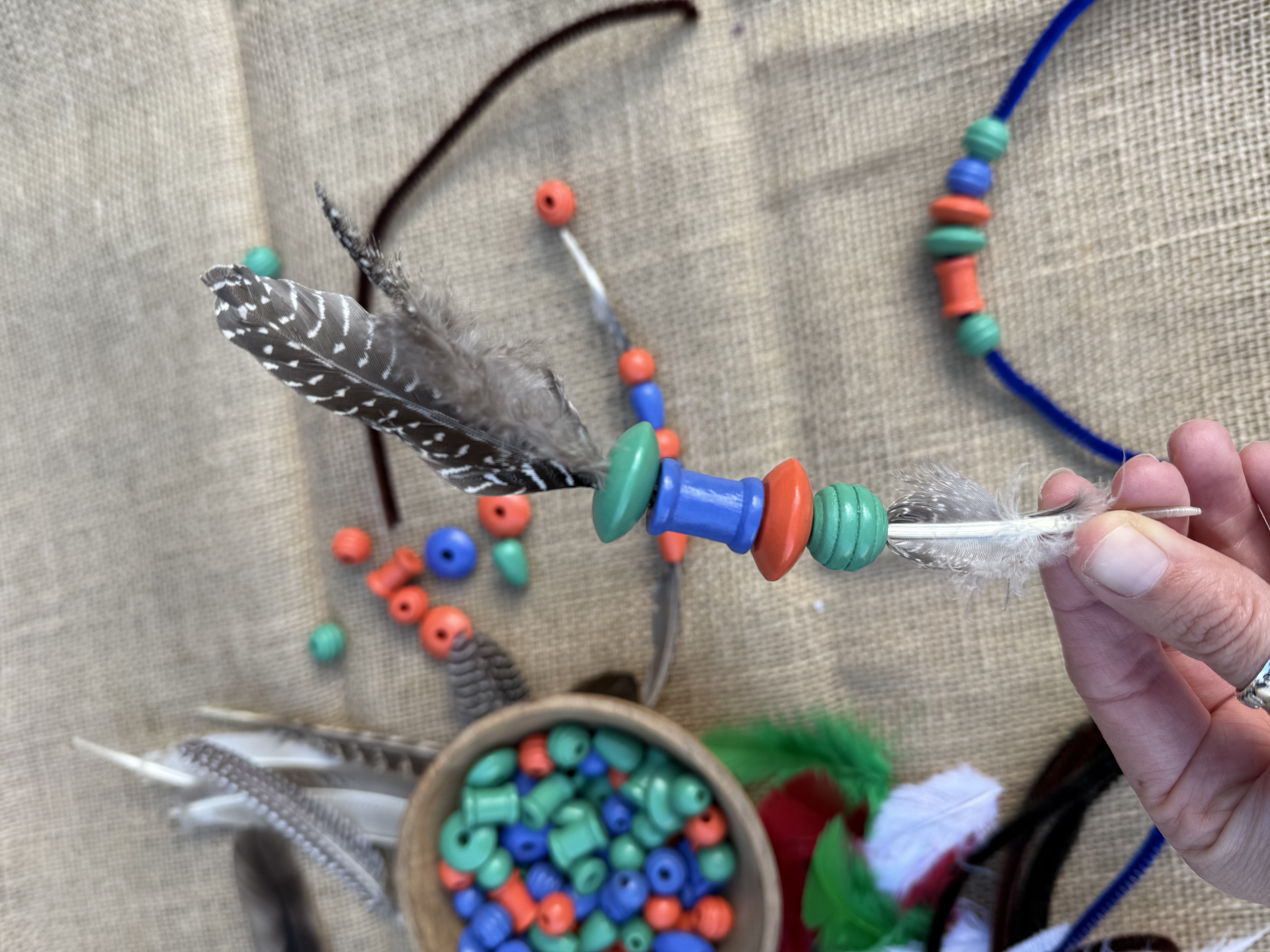
- A more intricate way of threading which really focusses on fine motor skills and hand eye coordination is using smaller beads and items such as feathers or pipe cleaners to thread onto.
Other activities that help with this skill and strengthen the hand muscles are pegging items on a washing line or squeezing pegs, spraying water from spray bottles, rolling and squeezing playdough, using tweezers to pick up items and playing with the mud.
Author
Katie Taylor
Early Years Specialist
Early Years specialist who loves inspiring outdoor learning.