
 Editor's pick
Classroom Inspiration & Curriculum Ideas
Classroom inspiration works best when it starts with what children need to learn. Explore practical teaching ideas, curriculum activities and adaptable approaches for early years and primary classrooms. Find ways to connect subjects, support participation and make purposeful use of familiar resources, with guidance that helps you turn a promising idea into manageable everyday practice.
Classroom Inspiration & Curriculum Categories
How can you turn an activity idea into purposeful learning?
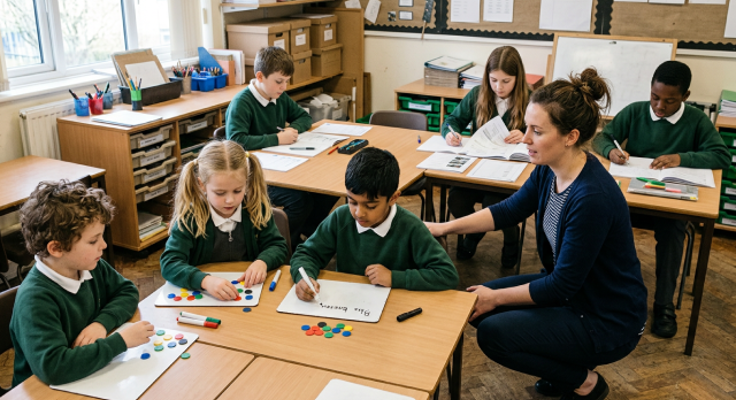
Start with a clear learning intention, then choose an activity that helps children explore or practise it. Think about what they already know, the vocabulary you will introduce and how you will recognise understanding. A memorable theme can provide a starting point, while the teaching sequence gives it purpose.
Before adding new materials, consider what you already have. Books, whiteboards, loose parts and everyday objects can be used in different ways across the week. Keep preparation manageable and allow time to revisit ideas rather than introducing a new activity for every lesson.
→ Related Guide: Eight (not six / seven) Teaching Tips and Strategies by Mike Kinnear
Featured articles


19 Back To School Activities For The Classroom
Back to school activity inspiration! We’ve gathered some of the best ideas from across the internet to inspire your first-day-back lesson planning.

Creating A Circular Economy In The Nursery
Sustainability is more than a trend - it’s a shared responsibility, and the nursery is the perfect place to nurture these skills.

Top 4 Resources for EYFS
Top resources to keep children entertained in their Early Years

How To Have An Eco Friendly Classroom
Teachers should make sure that pupils understand the importance of recycling to have an eco-friendly classroom.

LEGO® Development Workshops & Training Sessions
Find out how to deliver engaging Computing, STEM and Design & Technology lessons using LEGO® Education's innovative resources.

Remote Control Animals
Introduce early years learners to the world of coding with our brand new Remote Control Woodland Animals!

Sustainable swaps for your classroom
Discover smart sustainable swaps for your classroom to work toward a greener future and help protect the environment.

Classroom Recycling Ideas
Use these classroom recycling ideas to strive toward a greener future and teach children the importance of protecting the environment.

Pyramid building
Recreate those stone-built marvels with just a handful of clay and some gold paint with this seven-step craft.

21 Summer holiday ideas for teachers
21 summer holiday ideas for teachers so you can make the most of it

Ways To Memorise Locations Of Countries On A World Map
Engaging and creative ways to aid pupils in remembering countries and where they are on a world map.

Teaching Science Outdoors
Science can be one of the most exciting outdoor teaching subjects With these activity ideas, you’ll never be short of outdoor science experiments.
Frequently Asked Questions
How do I choose a classroom activity that supports the curriculum?
Begin with what you want children to know, understand or practise. Check where the activity fits in your teaching sequence and what pupils already know. Then choose materials, questions and support that serve that aim. Decide what you will look or listen for so that you can judge whether the activity has helped.
Can one resource support learning across different subjects?
Yes, when each use has a clear purpose. A set of objects might support counting, descriptive language or a sorting investigation at different times. Make the intended learning explicit and avoid adding subject links simply to make an activity cover more areas. Reusing familiar materials can also reduce preparation and help children use resources confidently.
How can I adapt an activity for children with different needs?
Keep the learning intention in view while adjusting how children access the task and show understanding. You might use larger materials, visual prompts, shorter instructions, a quieter space or additional modelling. Draw on what you know about individual pupils and agreed support plans. Review the adaptation through observation and discussion, rather than assuming one approach suits everyone.
What can I do when planning time is limited?
Choose a familiar routine and change the content rather than rebuilding the whole lesson. Reuse resources, keep instructions clear and select one manageable learning focus. A short discussion, worked example or practical task can be useful when it fits the teaching sequence. Keep notes on what worked so that successful approaches are easier to use again.
Are the ideas suitable for both early years and primary classrooms?
This hub brings together ideas for early years and primary teaching, but each activity needs to be checked against the children, curriculum and setting. Early years provision may involve exploration and responsive adult interaction, while primary lessons may need more explicit subject teaching. Use the linked article to assess its audience and adapt the approach thoughtfully.