

 Editor's pick
Maths Resources for EYFS and Primary Schools
Maths resources should help children explore quantities, number relationships, pattern, shape, space and measure before connecting these ideas to pictures, language and symbols. Useful provision may include counters, ten frames, number lines, cubes, shapes and measuring tools. Resources should be selected according to the mathematical concept, pupils’ prior understanding and the representations used within the school’s curriculum.
Explore Maths Resources and Guidance
Which Resources Support Early Number?
Real objects, counters, five and ten frames, numeral cards, dice and subitising resources help children develop an understanding of quantity, composition, and number relationships.
→ Related Guide: Early Number Guidance
Which Resources Support Counting?
Number lines, tracks, songs, stories and daily routines create repeated opportunities to use counting language for a genuine purpose and support counting, ordering and movement between numbers.
→ Related Guide: Counting Guidance
How Do Shape and Spatial Resources Support Geometry?
Two-dimensional shapes, three-dimensional objects, construction sets, pattern blocks, tiles and positional language resources help pupils sort, compare, investigate properties, and explore spatial relationships.
→ Related Guide: Shape and Space Guidance
Which Resources Support Measure?
Length and height tools, balance scales, capacity containers, time resources, money and temperature tools help pupils compare, quantify, and explore standard and informal units.
→ Related Guide: Measure Guidance
How Do Resources Support Pattern and Connections?
Repeating patterns, growing patterns, number grids and shape patterns help children copy, continue, create units, and identify relationships between numbers and geometric rules.
→ Related Guide: Patterns Guidance
Which Manipulatives Support Number Sense and Progression?
Counters, five and ten frames, bead strings, linking cubes, base-ten equipment, place-value counters, fraction pieces and number rods expose mathematical structures from EYFS through primary school.
→ Related Guide: Manipulatives Guidance
How Should Schools Progress Maths Resources Across Primary School?
| Phase | Main mathematical focus | Possible resources |
|---|---|---|
| EYFS | Counting, quantities, numbers to ten, composition, comparison, pattern, shape, space and measure. | Real objects, counters, five and ten frames, dice, numeral cards, blocks, puzzles, containers and scales. |
| KS1 | Place value, calculation, equal groups, fractions, geometry and measure. | Ten frames, bead strings, linking cubes, base-ten equipment, number lines, arrays and fraction pieces. |
| Lower KS2 | Larger numbers, formal calculation, multiplication, division, fractions, measure and geometry. | Place-value counters, base-ten equipment, arrays, multiplication grids, fraction strips and measuring tools. |
| Upper KS2 | Fractions, decimals, percentages, ratio, negative numbers, geometry and increasingly abstract reasoning. | Place-value charts, fraction and decimal representations, double number lines, coordinate grids and geometric equipment. |
Maths Resource and Representation Audit
Checklist to review maths resources from EYFS through primary school
Featured articles

Explore maths resources, manipulatives and curriculum materials from Hope Education.
Explore maths resources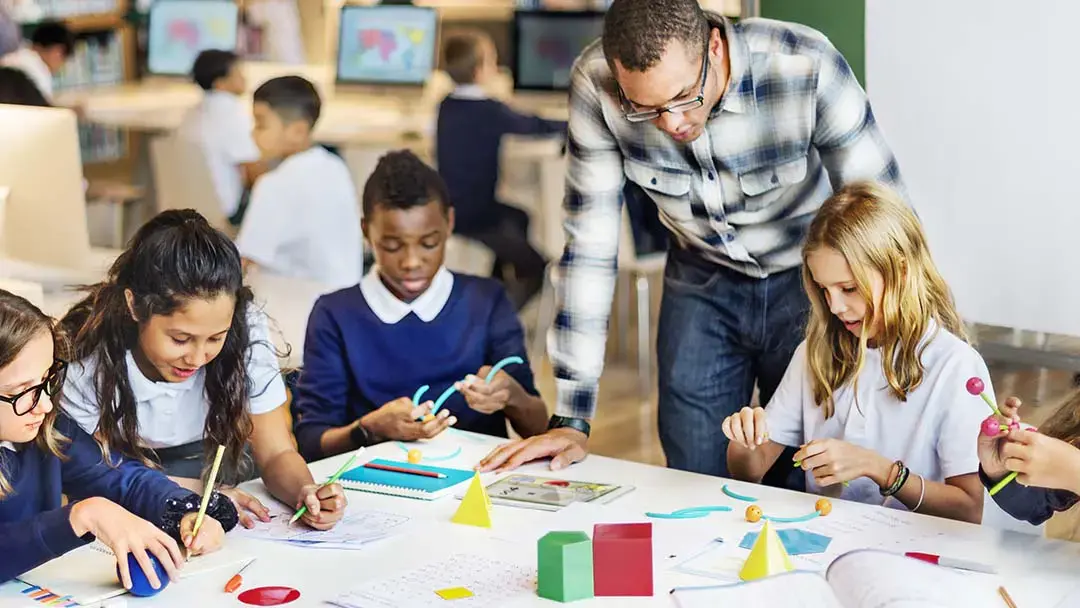
8 Skills every Great Maths Teacher needs
Skills needed for teaching maths in primary schools.
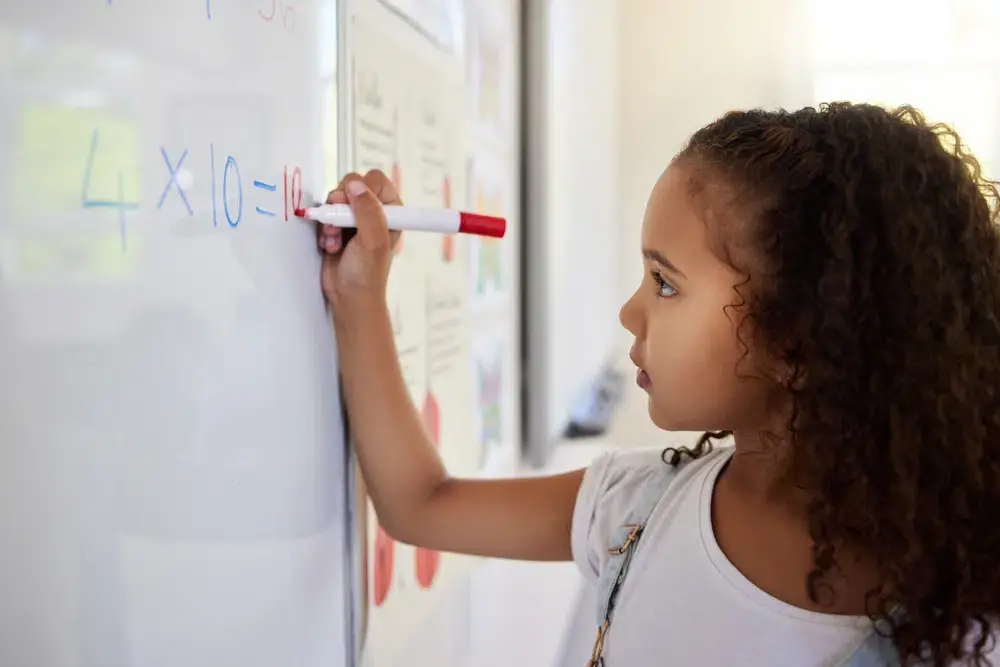
5 Tips & Tricks to make Learning Times Tables Easier
Help to make times tables easier for your pupils.
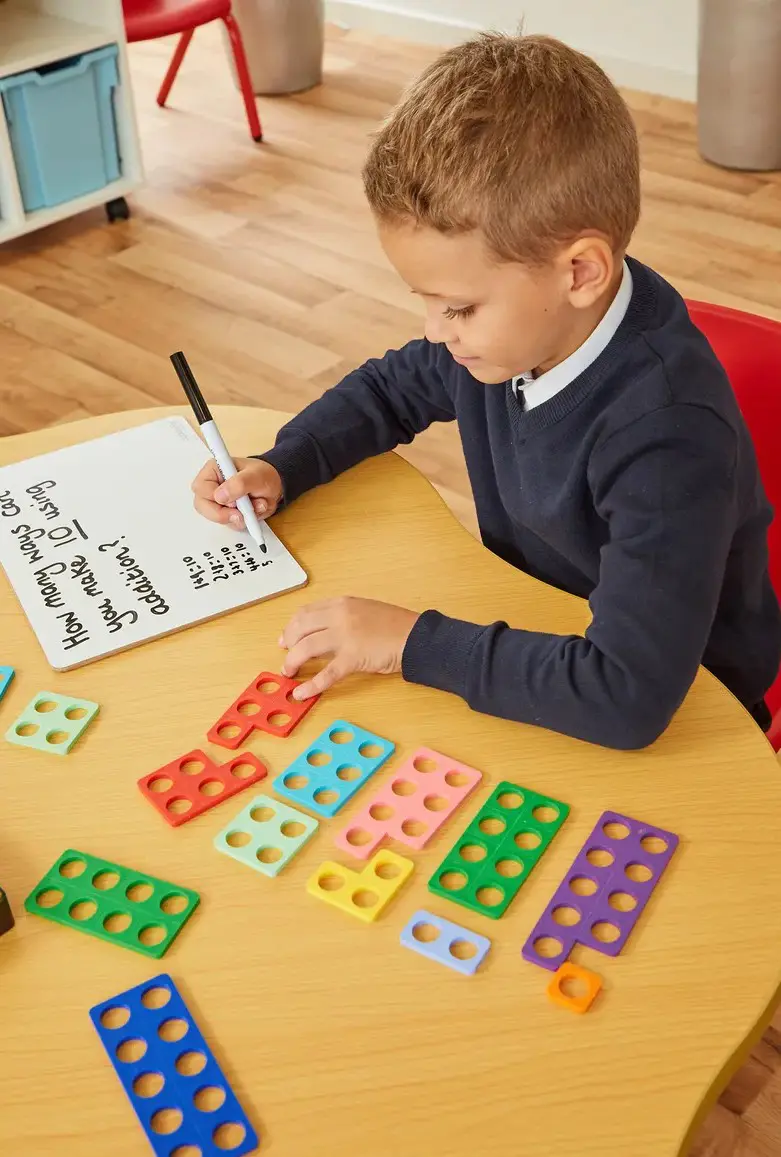
Numicon activities for the classroom
Numicon activities for the classroom that you can try out and adapt for different ages.
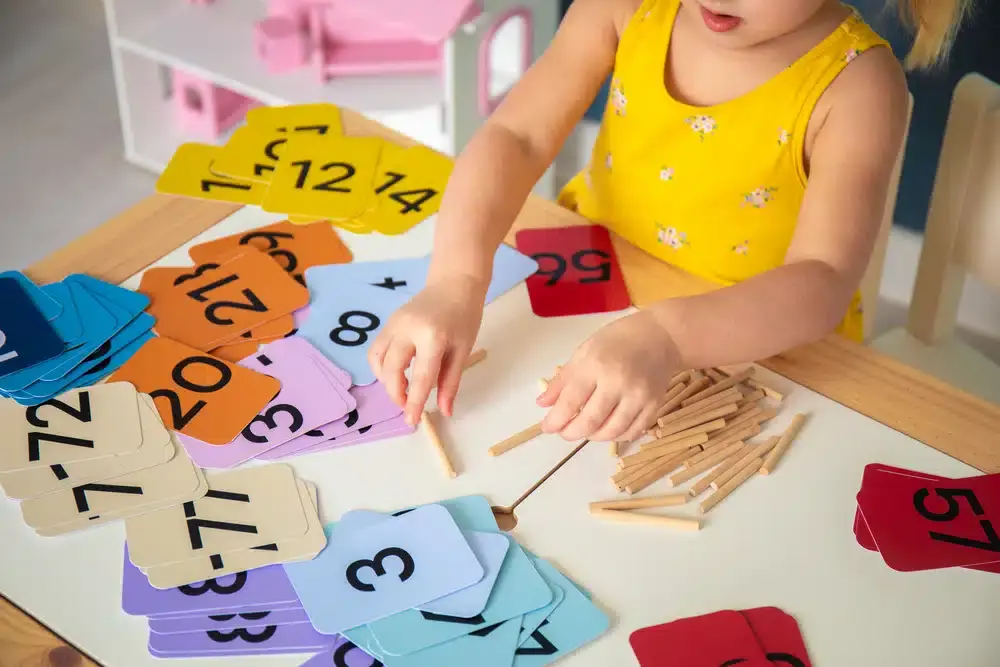
Negative and positive number activities to do in the classroom
Visual representations and games that help pupils to understand positive and negative numbers in an enjoyable, fun way.
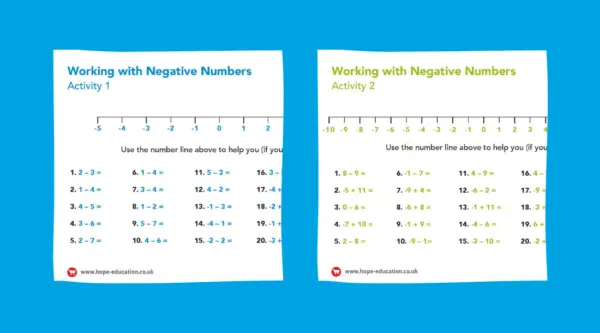
Number line with negative numbers: A printable worksheet
Frequently Asked Questions
Which maths resources support learning from EYFS through primary school?
Useful resources include counters, frames, cubes, bead strings, number lines, place-value equipment, shapes, measuring tools and fraction representations. The correct choice depends on the concept, pupils’ prior understanding and the school’s curriculum.
Which manipulatives are best for number sense?
No single manipulative is best for every aspect of number. Ten frames can highlight relationships to five and ten, while number rods, bead strings and cubes may reveal composition, magnitude or calculation structures.
What is concrete–pictorial–abstract learning?
It involves connecting physical resources, visual representations and mathematical symbols. It should not be treated as a rigid sequence. Pupils may move between representations while developing or explaining an idea.
How does play support early mathematics?
Play can create meaningful contexts for counting, comparison, shape, measure and pattern. Practitioners support learning by observing, modelling mathematical language and drawing attention to important ideas without taking control of the activity.
When should pupils stop using manipulatives?
Pupils can work without a manipulative when their understanding is secure and they can reason accurately without it. Equipment should remain available when it supports a new concept, explanation or problem.