
Musical Instruments for Early Years: 9 Essential Activities
Published on 11/12/2025 in Early Years
The Power of Sound in Early Child Development
Musical exploration in the Early Years Foundation Stage (EYFS) is crucial for developing language, mathematics, physical, and socio-emotional skills. As experienced early years educators, we know that non-pitched percussion instruments (like shakers, triangles, and drums - or our A-Star Rhythm and Pulse Percussion Set) are perfect for introducing sound concepts without the pressure of melody. The following activities are designed by our specialists to integrate music seamlessly into the Expressive Arts and Design (EAD) and Physical Development (PD) areas of learning, building strong foundations in rhythm, listening, and creativity.
1. Scenic Pictures
– Challenge Children to Choose Instruments to Make Sounds to Represent the Pictures
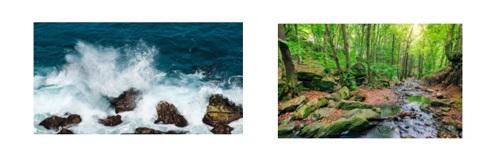
This activity is a superb way to introduce the concept of timbre (the quality of a sound). Begin by presenting large, high-contrast pictures (e.g., a stormy sea, a bustling city, a quiet forest). The key is to model how different instruments can represent different elements. For example, a Guiro or rain stick could represent the rain or the sea, a triangle could be the twinkle of a star, and a hand drum could represent thunder or heavy footsteps. This exercise develops auditory discrimination and abstract thinking, supporting the 'Listening and Attention' goal under the EYFS Communication and Language area. Encourage discussion: "Why does the shaker sound like rain?"
2. Retell a Story and Add Sound Effects
– Similar to Peter and the Wolf – Could Have Different Sounds to Represent Different Characters
Adopting the structure of Prokofiev's Peter and the Wolf is an outstanding approach to early music narrative. Select a simple picture book or create a short story where 3-4 key characters or events are easily distinguishable. Assign a unique instrument and/or rhythmic pattern (a motif) to each. For instance:
The Hero: A strong, steady beat on a Wood Block.
The Fox: A quick, high, rattling sound from a Maraca.
The Wind: A continuous, swirling sound from an Ocean Drum.
As you narrate, pause and cue the children to play the assigned instrument when their character is mentioned. This strengthens memory sequencing and promotes effective turn-taking and collaborative group performance.
3. Create Pictures of the Instruments
– Children Could Choose Some Cards and Compose a Piece of Music
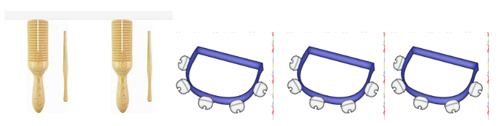
This activity transforms abstract sound into a visual, tangible resource, linking EAD with Mathematics (Sequencing). Prepare a set of large flashcards, each depicting one of the early years classroom instruments (e.g., chime bar, tambourine, castanets). The children then arrange 4-6 cards in a line on the floor or a whiteboard. This visual sequence becomes their musical score. As a group, they 'read' the score from left to right, playing the instrument shown on each card in order. This introduces the fundamental concept of notation and composition. This visual-kinaesthetic approach is particularly effective for learners who thrive through hands-on, sequential tasks.
4. Parade
- Children Could March and Play in Time to a Piece of Marching Music
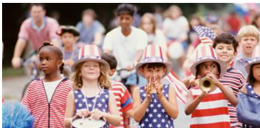
The parade is a foundational activity for developing gross motor skills and a sense of pulse (the beat). Before starting, ensure children grasp the concept of 'keeping a steady beat' by clapping their hands or tapping their knees. Play a clear piece of marching music with a steady rhythm (e.g., John Philip Sousa marches or simple children's walking songs). The focus should be less on the volume and more on playing in time with the music. Ensure the instruments used are sturdy and safe for movement, such as handled Tambourines or Rhythm Sticks. This links directly to the 'Moving and Handling' goals under Physical Development.
5. Practise Rhythms
– Could Link to Activity 1
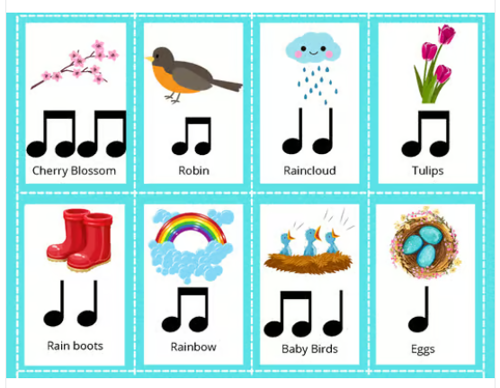
Building on the sounds created in Activity 1, this activity isolates and focuses purely on rhythm. The adult should use Rhythm Sticks or a handclap to create a short, simple rhythmic pattern (e.g., ta-ta, ti-ti-ta). The children must then attempt to immediately copy this pattern back using their chosen instruments. Keep the patterns 2-3 beats long initially. This is an excellent exercise in auditory memory and the quick development of fine motor control and coordination, as they must accurately manipulate the instrument to match the sound. The adult's role is key in providing clear, concise modelling.
6. Follow My Leader
- Copy Patterns on Instruments – Could Link to Materials – Instruments that have metal parts; wooden parts, plastic parts etc
This activity extends rhythm practice while introducing a valuable sorting and classification element. Group the children, or instruments, by the material they are made from:
Metal: Triangles, Cymbals, Hand Bells.
Wood: Wood Blocks, Claves, Rhythm Sticks.
Skin/Plastic: Hand Drums, Shakers, Maracas.
The 'leader' (adult or child) creates a pattern on one instrument, and the group must copy it using only the instrument from the same material group. This introduces children to the idea that the material directly influences the sound quality and timbre - a foundational concept in acoustics. It also supports early scientific inquiry and classification skills.
7. Soundscapes
- Could Use Pictures from Activity 1 to Produce a Piece of Music as a Group
A soundscape is a sophisticated group activity that focuses on improvisation and sustained listening. Using a scenic picture from Activity 1 (e.g., 'A Day at the Beach'), the group collaboratively creates the background sounds. Unlike the story in Activity 2, a soundscape does not follow a strict narrative; instead, children play freely, but listen carefully to what others are doing to ensure they are contributing to the overall atmosphere. For example, the beach soundscape could include continuous, gentle shakers (sand), periodic clanging of triangles (ice cream truck), and rhythmic hand drums (waves). The role of the adult is to act as a conductor, using simple hand signals to indicate who should start, stop, or play louder/softer (dynamics).
8. Accompany a Song by Playing an Ostinato
– Repeated Pattern Over and Over Again
An ostinato is a crucial musical concept that underpins most Western music. It is a short, continually repeated rhythmic or melodic phrase. Select a familiar, simple song (e.g., 'Twinkle Twinkle Little Star'). The adult teaches the children a simple four-beat ostinato (e.g., Tap-Tap-Shake-Rest). The children play this pattern on a single instrument (like a shaker or rhythm stick) without stopping, while the adult or the group sings the song over the top. This challenging activity develops concentration, rhythmic stability, and an understanding of musical structure. It also provides a comforting, stable base for the singers.
9. Move in Time to the Musical Instruments
– Stop When the Music Stops
This classic game of musical statues is essential for developing auditory attention and kinaesthetic awareness (the body's sense of movement). Instead of pre-recorded music, have the adult (or a child leader) play a simple instrument (like a drum or tambourine) while the group moves freely. The moment the instrument sound stops, the children must freeze immediately. This requires high levels of impulse control and focused listening. The variations should include changing the tempo (speed) and dynamics (volume) of the playing, challenging the children to adjust their movement accordingly (fast music = fast movement; quiet music = tiptoeing). This activity is a powerful tool for fostering self-regulation.
Fostering a Lifelong Love of Music
Integrating these activities into your Early Years setting provides a powerful, multi-sensory foundation for learning. By providing structured, safe, and expert-led musical experiences, we ensure children are not just having fun, but actively developing the fine motor skills, mathematical concepts, and emotional regulation necessary for success in their later schooling.