
Simple Balance Games for Key Stage 1
Published on 12/01/2026 in Advice & Inspiration
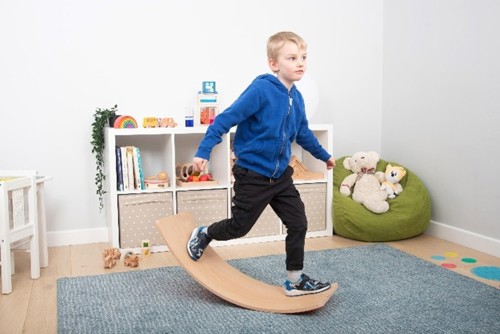
Developing balance is a key part of physical development in Key Stage 1. Before children can run, jump or take part confidently in games and sports, they need to master the basics; sitting, standing, walking and moving with control.
Balance is the ability to maintain a steady, controlled position without falling. It underpins a wide range of gross motor skills, including hopping, skipping, cycling and coordination-based activities. By introducing balance-focused games early, children build strength, confidence and body awareness while enjoying active, engaging play.
Below are a range of simple, adaptable balance games ideal for KS1 pupils, using accessible PE equipment commonly found in school settings.
1. One-Leg Balance Challenges
Ask children to balance on one leg while standing on a throw-down spot. The spot provides a clear visual boundary, helping pupils focus on posture and stability.
Make it harder:
Balance on one leg while holding a beanbag on the head
Balance on one leg while throwing and catching a beanbag
Make it easier:
Balance on one leg while resting the other foot on a chair or soft ball
Game idea:
Use a stopwatch to time how long each child can hold their balance. Encourage pupils to improve their own personal best.
Equipment needed:
Throw-down spots, beanbags, stopwatch
Group size:
Individual challenges, pairs or small teams of three, rotating roles
2. Hands and Feet Balance Patterns
Using four coloured throw-down spots, children balance with hands and feet placed on different spots. Rearrange the spots into new shapes or patterns to vary the challenge.
Make it harder:
Move spots further apart or into uneven patterns
Make it harder still:
Use just two spots, balancing both hands and both feet on one
Make it easier:
Use four spots with hands and knees instead of feet
Game idea:
Time how long pupils can hold their position and challenge them to beat their previous score. Turn this into a group activity to encourage teamwork and motivation.
Equipment needed:
Throw-down spots, cones, stopwatch
Group size:
Start individually, then introduce small groups
3. Partner Balance and Catch
In pairs, children balance a rubber quoit on their head while throwing and catching a beanbag. This activity develops balance alongside hand–eye coordination.
Make it harder:
Stand on a fixed throw-down spot
Balance on one leg while catching
Make it easier:
Replace the beanbag with a larger, slower-moving ball
Game idea:
Award points to pairs who maintain their balance the longest without dropping the quoit.
Equipment needed:
Throw-down spots, rubber quoits, beanbags, large ball, stopwatch
Group size:
Pairs or larger groups, with results recorded on a whiteboard
4. Balance Line Walk
Lay a skipping rope on the floor in a straight line. Children walk from one end to the other, staying on the line to develop dynamic balance.
Make it harder:
Arrange the rope in a curved or wavy shape
Add a beanbag or quoit balanced on the head
Make it easier:
Use two ropes to create a wide pathway and gradually narrow the gap
Game idea:
Mark distances with cones and record how far each child successfully travels. Encourage pupils to improve their personal best or work together in relay teams.
Equipment needed:
Skipping ropes, beanbags, rubber quoits, cones, stopwatch, whiteboard
Group size:
Individual challenges or team relays
Why Balance Matters
By practising balance regularly, children learn how to control their muscles and adjust to movement changes. These skills support confidence, coordination and success in playground games, PE lessons and sports as children progress through school.
Safety is always essential. Ensure suitable matting is used where needed and that activities are appropriately supervised and adapted to suit individual abilities.
Keep Building Physical Skills
Explore our other PE essentials and activity ideas, including coordination and agility challenges, to support well-rounded physical development in KS1.
The possibilities are endless — adapt activities to suit your class, encourage creativity, and track progress through personal bests, team games and friendly competition.
Learning through movement starts here.