
Children’s Mental Wellbeing in Schools: A Simple Classroom Strategy That Works
Published on 26/05/2026 in Primary
Imogen Buxton-Pickles is a primary PE specialist and founder of imoves, an all-in-one PE and active learning platform that empowers teachers to deliver PE confidently. A subscription to imoves includes video content teachers can play to their classes daily, or as they choose. These short bursts of activity help children move, express themselves and revitalise energy levels for the rest of the school day, supporting children’s mental wellbeing, emotional health and focus in school.
As an experienced practitioner, Imogen knows there are many complex needs, and school life is not easy. Read one of her top tips for supporting children’s mental health and wellbeing in the classroom.
“Many teachers feel like teaching is a tough job. Not only because of the long hours, unreasonable workload and oversubscribed classes, but because every day you see kids struggling.
Struggling with their peers. Struggling with their lessons. Struggling with their homework.
But most of all, struggling with their mental health.
Around one in six children in the UK has a diagnosable mental health condition right now. In your class of thirty, that's five kids. Five children who are holding something they can't name, can't explain, and have no idea what to do with.
But you don’t need me to tell you this, you see it every day. Angry kids. Sad kids. And the most worrying of all the quiet, disassociated kids who don't cause any trouble but most definitely are not ok.
But what can you do about it?
The waiting lists for CAMHS are running at over a year in most areas. Parents are lost. The system is overwhelmed. And all of that quietly settles on your shoulders, in your classroom, on your watch.
You can't fix the system. But there’s one simple strategy, used by many teachers already, that can help lighten the load on children and support mental wellbeing in schools.
A simple shoebox strategy to support children’s mental health in the classroom
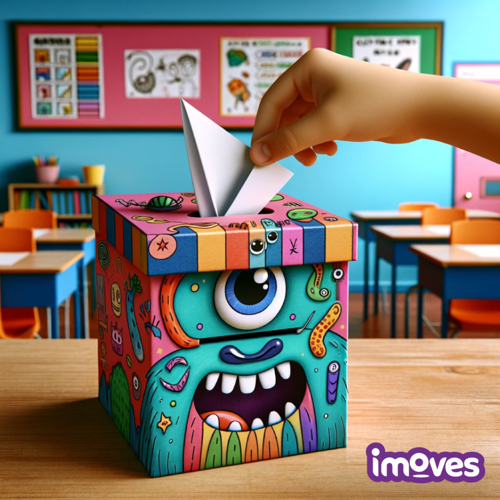
Get a box. A shoebox, a tissue box, whatever's knocking around.
Cut a slot in the top. Leave some scraps of paper and a pen next to it. Then tell your class, just once, just casually: if something's going on and you can't say it out loud, write it down and put it in the box.
I will read every single one.
Because here's the thing: most children who are struggling with their mental health aren’t refusing help. They just can't bring themselves to ask for it out loud. Walking up to a teacher, in a classroom, in front of everyone - it’s too much.
The box changes that. It's a simple, safe way of saying “I need help” without having to say it to anyone's face - supporting emotional expression, wellbeing and safeguarding in schools.
Check the box at the end of each day. If something in there needs following up, follow it up - a quiet word, a gentle check-in, nothing that puts them on the spot.
One box. A few scraps of paper. A promise that you'll read what's inside.
Sometimes that's all a child needs to finally let someone in.
Most kids spend all day sitting in a classroom and all evening scrolling on their phones. We all know that physical activity is one of the best ways to improve children’s mental health, so make your classrooms active and get more movement into their day.
Get a free imoves Active Blasts trial by clicking here.”
Visit the Hope range of SEND specific products to discover how you can support children’s mental wellbeing with made for education resources.
Author

Imogen Buxton-Pickles
Primary PE specialist and founder of imoves
An all-in-one PE and active learning platform that empowers teachers to deliver PE confidently